Sunday, November 15, 2026 · Year A
Thirty-third Sunday in Ordinary Time
Don’t bury your talent
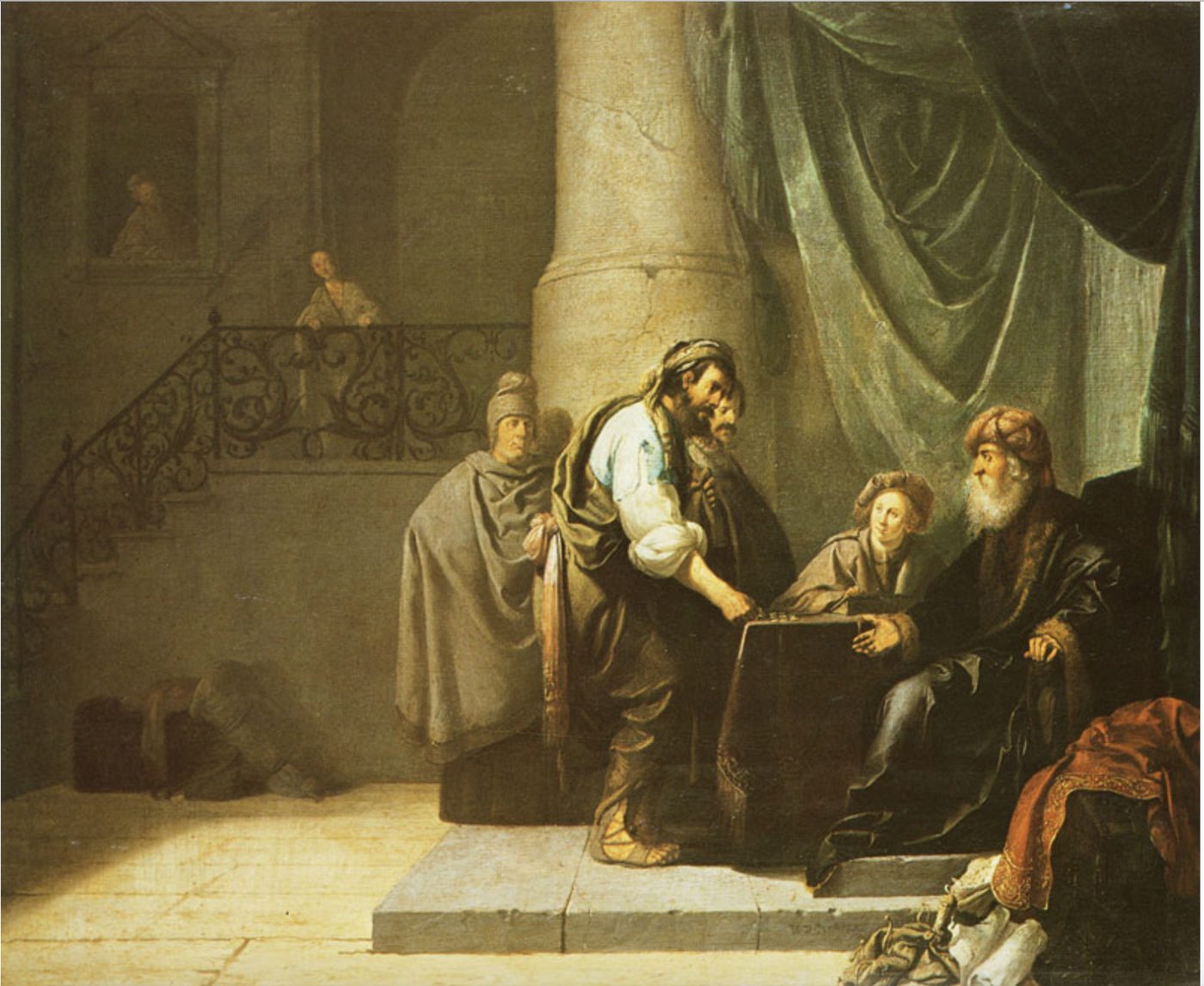
A master entrusts his wealth to three servants. Two invest it and double it; one buries his out of fear. God’s gifts are meant to be used, and to bear fruit.
Mass Readings
- First Reading Proverbs 31:10-13, 19-20, 30-31
- Responsorial Psalm Psalm 128:1-2, 3, 4-5
- Second Reading 1 Thessalonians 5:1-6
- Gospel Matthew 25:14-30
Open the Mass Readings on USCCB.org →
First Reading Proverbs 31:10-13, 19-20, 30-31
The worthy wife is praised for her hard work, her care for the poor and her reverence for the Lord. Her faith shows in her daily life.
Psalm Psalm 128
Blessed are those who fear the Lord and walk in His ways. Their homes are filled with His blessing.
Second Reading 1 Thessalonians 5:1-6
Paul reminds us that the day of the Lord will come like a thief. Children of the light stay awake and alert.
Gospel Matthew 25:14-30
A master entrusts his servants with his wealth. Two put it to work; one buries it out of fear. Jesus wants us to use what He has given us.
Step Into the Story
Proverbs closes with a poem to a capable wife, an acrostic in which each of its 22 verses begins with the next letter of the Hebrew alphabet. She buys fields, spins wool and opens her hand to the poor. The book gathers sayings credited to Solomon, who reigned in the tenth century B.C., and took its final form after the exile. Paul, writing to Thessalonica around 50 A.D., warns that the Day of the Lord comes like a thief in the night.
- 10th c. B.C.Solomon reigns in Jerusalem
- 63 B.C.Pompey takes Jerusalem
- 14 A.D.Tiberius becomes emperor
- 26 A.D.Pilate becomes prefect
- This week’s scene: c. 30 A.D.The parable of the talents
Climb back up Olivet with the disciples. It is Passover week, and by the likeliest reckoning the year is 30 A.D. Below, Jerusalem is swelling with Passover pilgrims, and the Temple, its gold catching the light, dominates the ridge opposite. Sit among the olive trees. He is still speaking of the end and of the master who will return.
Now He tells of money. Feel the weight He means: a talent is a mass of silver worth about 6,000 denarii, some twenty years of a laborer’s wages. One servant gets five, another two, another one. Even the least is handed a fortune. Watch the third man in your mind’s eye as he walks out to a field, digs a hole and lowers his master’s silver into the earth. Then wait, with the others, for the master to come home.
Encounter the Lord
The master calls his servants together and hands each a fortune before he leaves. Watch the first two hurry off to put it to work. Then watch the third, alone in a field at dusk, digging a hole and lowering the silver into the dirt.
Listen to the master’s heart when he returns. He is not a tyrant counting coins. He is overjoyed with the servants who tried. “Come, share your master’s joy.” What grieves him is the servant who thought so poorly of him that fear buried the gift. Christ trusts you with real gifts because He believes in what His grace can do in you.
Name one gift you have been burying out of fear or laziness. This week, use it for someone else: your time, your skill, your faith, your money.
Know Your Faith
- 163-164·the Last Judgment and the end of the world
- 341·good works and heaven
Merit as God’s Gift
We have received everything from God (CCC 2007). Merit arises because He freely associates us with the work of His grace: His initiative comes first, our free response follows (CCC 2008).
Talents Given for Others
Differences of gifts belong to God’s plan, so that those endowed with particular “talents” share them with those who need them (CCC 1936-1937).
The Last Judgment
At the Last Judgment the good each has done or failed to do will be laid bare (CCC 1039). Its message calls us to conversion while God still gives us time (CCC 1041). Proverbs’ worthy wife reminds us that God gives man and woman equal personal dignity (CCC 2334).
Sharing Your Gifts
Name one gift you have been burying, and share it this week with someone who needs it (CCC 1937).
Key Takeaways
- Scripture
- Doctrine
- Sacraments
- Christian Life


- Doctrine: Everything we have is a gift from God, and His grace always comes before our good works.
- Christian Life: God gives people different gifts so that they will share them with those in need.
- Christian Life: Fear can keep us from using our gifts; trust in God helps us use them for others.
- Doctrine: At the Last Judgment, the good we did and the good we failed to do will be made known.
Test Your Knowledge
True or false? Tap your answer.
Everything we have, including our abilities, is ultimately a gift from God.
True.
Our good works come first, and God’s grace follows as a reward.
False: God’s initiative comes first; our free response follows, CCC 2008.
Differences in people’s gifts are part of God’s plan, so that we share with those in need.
True.
The third servant’s real failure was a fearful, distorted image of his master.
True.
Playing it safe with our gifts is what Jesus praises in this parable.
False: He praises the servants who put their gifts to work.
At the Last Judgment, the good we failed to do will also be revealed.
True.
The message of the Last Judgment is meant to call us to conversion now.
True.
Merit before God is something we achieve entirely on our own.
False: merit comes from God freely associating us with His grace, CCC 2008.
Proverbs’ worthy wife shows faith expressed through work and generosity.
True.
Our talents are meant mainly for our own advancement.
False: gifts are to be shared with those who need them, CCC 1937.
Answers: 1 T · 2 F (God’s initiative comes first; our free response follows, CCC 2008) · 3 T · 4 T · 5 F (He praises the servants who put their gifts to work) · 6 T · 7 T · 8 F (merit comes from God freely associating us with His grace, CCC 2008) · 9 T · 10 F (gifts are to be shared with those who need them, CCC 1937)
Journal Prompts
What gifts has God entrusted to me that I rarely thank Him for?
Where has fear kept me from using a gift? What exactly am I afraid of?
When I picture my life laid open before God, what do I hope He will see?
Who has invested in me, and how might I invest in someone else?
Talk to God
Lord, everything I have is Yours. Free me from the fear that buries what You have entrusted to me. Let me spend it boldly for Your glory and my neighbor’s good, and one day share Your joy. Amen.