Sunday, November 22, 2026 · Year A
Our Lord Jesus Christ, King of the Universe
The King who is found in the least
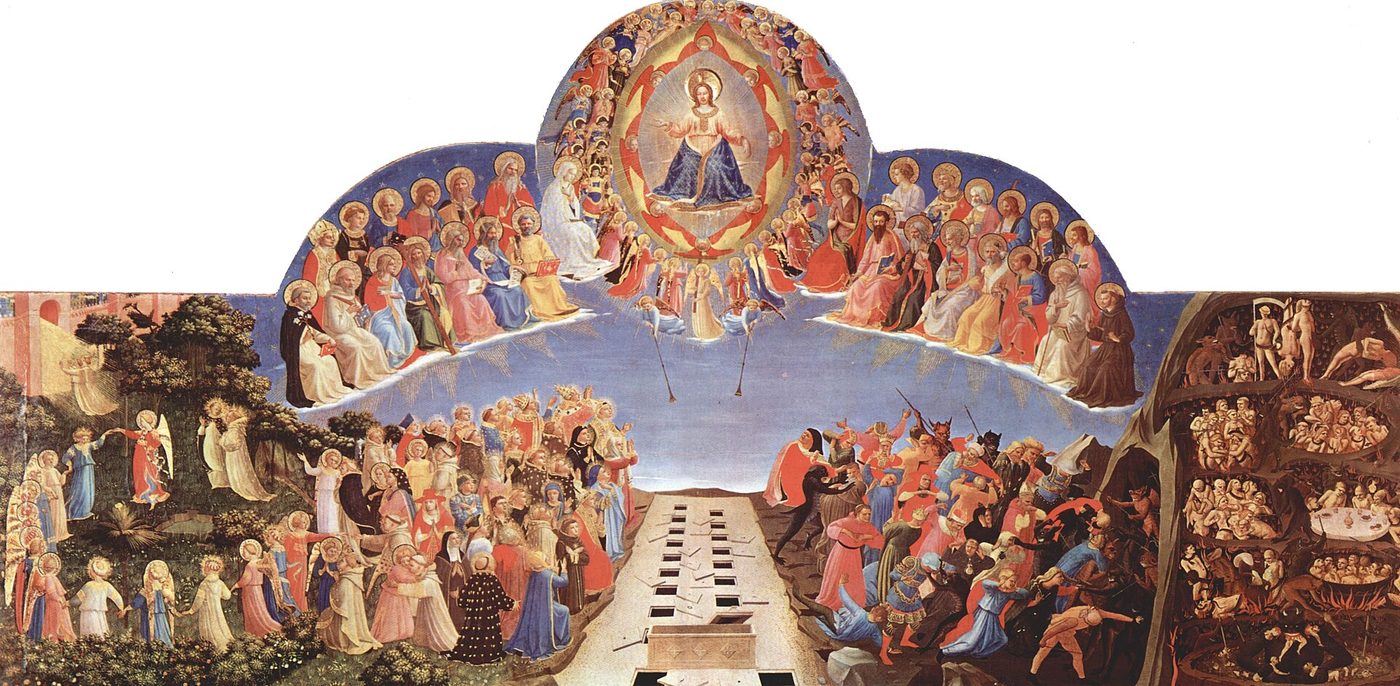
On the last Sunday of the Church year, Christ the King comes to judge the nations. He tells us where to find Him now: in the hungry, the stranger, the sick and the prisoner.
Mass Readings
- First Reading Ezekiel 34:11-12, 15-17
- Responsorial Psalm Psalm 23:1-2, 2-3, 5-6
- Second Reading 1 Corinthians 15:20-26, 28
- Gospel Matthew 25:31-46
Open the Mass Readings on USCCB.org →
First Reading Ezekiel 34:11-12, 15-17
God promises to shepherd His people Himself: to seek the lost, bind up the injured and judge with justice.
Psalm Psalm 23
The Lord is my shepherd. With Him I lack nothing, even in the dark valley.
Second Reading 1 Corinthians 15:20-26, 28
Christ is the first fruits of the resurrection. In the end He will hand over the Kingdom to the Father, so that God may be all in all.
Gospel Matthew 25:31-46
The King separates the sheep from the goats. Whatever we did for the least of His brothers and sisters, we did for Him.
Step Into the Story
Ezekiel was a priest carried off to Babylon in 597 B.C. with King Jehoiachin and the first wave of exiles, and he watched from afar as Nebuchadnezzar destroyed Jerusalem in 586 B.C. He blames Israel’s kings, shepherds who fed themselves while the flock scattered, and brings God’s promise: “I myself will look after my sheep.” Paul, writing from Ephesus around 54 A.D., insists that Christ will reign until every enemy, even death, lies under His feet.
- 597 B.C.Ezekiel taken to Babylon
- 586 B.C.Babylon burns Jerusalem
- 63 B.C.Pompey takes Jerusalem
- 26 A.D.Pilate becomes prefect
- This week’s scene: c. 30 A.D.The sheep and the goats
Start with a sight every listener knows. A mixed flock grazes the stony hills of Judea, sheep and goats together, and the herdsman moves among them with his staff, parting one kind from the other. Ezekiel used the same picture six centuries before. Hear the bleating and the click of hooves on rock, and smell the dust and animals.
Then come to the Mount of Olives, two days before Passover; the year is most likely 30 A.D. This is the last of His great discourses in Matthew. Across the valley the Temple’s courts fill with pilgrims for Passover. The disciples sit close. He speaks of the Son of Man coming in glory, with all the nations gathered before His throne, and of a shepherd who separates. Sit among them now. Look at His face, and wait to hear who will stand on His right.
Encounter the Lord
Picture the scene at the end of history: every nation gathered, and the King on His throne. Then the surprise. He does not ask about our titles or achievements. He asks about a cup of water, a coat, a visit to a hospital or a jail. “You did it for me.”
This King has nail marks in His hands. He rules from a cross, and He hides Himself in the poor, the sick and the forgotten so that we can serve Him every day. His heart is a shepherd’s heart: He goes looking for the lost, and He asks us to go with Him.
This week, perform one corporal work of mercy deliberately for Christ. Before you begin, whisper, “Lord, I know it is You.”
Know Your Faith
- 75·Jesus called Lord
- 110·Christ, Lord of the whole world
- 112·Christ the Judge
- 520·“Thy kingdom come”
Jesus Is Lord
To call Jesus “Lord” is to confess that He is divine (CCC 446-449). He reigns as Lord of the cosmos and of history (CCC 668).
Christ the Judge
Christ acquired the right to judge by His Cross (CCC 679). At the Last Judgment He identifies Himself with the poor and needy (CCC 1039).
To Reign Is to Serve
The King of the universe made Himself the servant of all. For the Christian, “to reign is to serve him,” especially in the poor and the suffering (CCC 786).
Works of Mercy
This week, perform one corporal work of mercy, such as feeding the hungry or visiting the sick (CCC 2447), knowingly for Christ.
Key Takeaways
- Scripture
- Doctrine
- Sacraments
- Christian Life


- Doctrine: Jesus is Lord of all creation and history, and He has the right to judge because He died on the Cross.
- Christian Life: Jesus is present in the hungry, the stranger, the sick and the prisoner.
- Christian Life: Jesus is a King who serves, and His followers lead by serving others.
- Christian Life: When we help people in need, we are serving Christ Himself.
Test Your Knowledge
True or false? Tap your answer.
Calling Jesus “Lord” is a confession that He is divine.
True.
Christ the King rules by domination and force, like earthly kings.
False: He rules from the Cross; to reign is to serve, CCC 786.
At the Last Judgment Christ identifies Himself with the poor and needy.
True.
Christ acquired the right to judge by His Cross.
True.
According to Matthew 25, judgment will focus on our titles and achievements.
False: it turns on how we treated the least of His brothers and sisters.
Ezekiel’s promise that God will shepherd His people Himself is fulfilled in Jesus.
True.
Works of mercy are optional extras for especially devout Christians.
False: serving Christ in the poor belongs to every Christian, CCC 2447.
For the Christian, to reign with Christ means to serve Him, especially in the poor.
True.
Christ’s kingship applies only to private devotion, not to nations or history.
False: He reigns as Lord of the cosmos and of history, CCC 668.
Feeding the hungry and visiting the sick are corporal works of mercy.
True.
Answers: 1 T · 2 F (He rules from the Cross; to reign is to serve, CCC 786) · 3 T · 4 T · 5 F (it turns on how we treated the least of His brothers and sisters) · 6 T · 7 F (serving Christ in the poor belongs to every Christian, CCC 2447) · 8 T · 9 F (He reigns as Lord of the cosmos and of history, CCC 668) · 10 T
Journal Prompts
Is Christ really the King of my life, or more like a trusted adviser I consult when convenient?
Where have I failed to recognize Christ in someone this month?
Which of the works of mercy comes easily to me, and which do I avoid?
What part of my life have I not yet let Him rule?
Talk to God
Lord Jesus Christ, King of the Universe, reign in my heart. Open my eyes to see You in the hungry, the stranger and the sick, and give me hands that serve You there. Find me faithful when You come. Amen.