Sunday, December 6, 2026 · Year B
Second Sunday of Advent
Prepare the way of the Lord
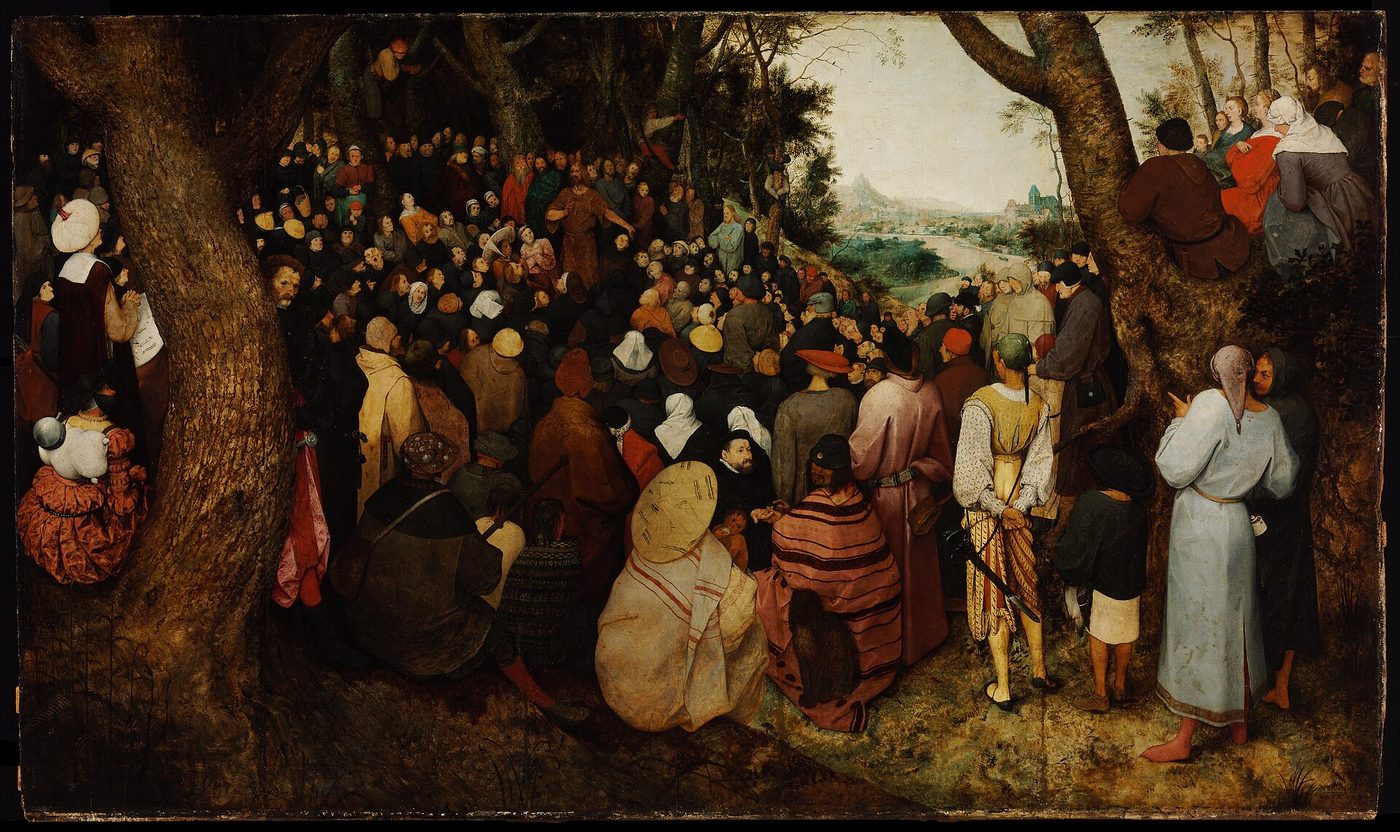
Comfort, my people! Isaiah announces that God is coming, and John the Baptist appears in the desert calling for repentance and pointing to one mightier than He.
Mass Readings
- First Reading Isaiah 40:1-5, 9-11
- Responsorial Psalm Psalm 85:9-10, 11-12, 13-14
- Second Reading 2 Peter 3:8-14
- Gospel Mark 1:1-8
Open the Mass Readings on USCCB.org →
First Reading Isaiah 40:1-5, 9-11
Comfort my people, says the Lord. Prepare a way in the desert. He comes to gather His flock like a shepherd.
Psalm Psalm 85
The psalm promises that kindness and truth will meet, and justice and peace will kiss.
Second Reading 2 Peter 3:8-14
God is not slow; He is patient, wanting everyone to come to repentance. We wait for new heavens and a new earth.
Gospel Mark 1:1-8
John the Baptist appears in the wilderness, calling people to repent and pointing to One mightier who is coming.
Step Into the Story
Isaiah 40 was written for Jewish exiles in Babylon around 540 B.C., nearly fifty years after Nebuchadnezzar burned Jerusalem. It opens tenderly: “Comfort, give comfort to my people.” Valleys filled in, mountains made low: God is bringing His people home. Six centuries later, in the fifteenth year of Tiberius, around 28 A.D., a voice in the wilderness takes up those words. Pilate governs Judea, Antipas rules Galilee, and Caiaphas is high priest.
- 586 B.C.Babylon burns Jerusalem
- c. 540 B.C.Isaiah comforts the exiles
- 14 A.D.Tiberius becomes emperor
- 26 A.D.Pilate becomes prefect
- This week’s scene: c. 28 A.D.A voice in the wilderness
Go down to the Jordan, where the river crawls through the lowest valley on earth, more than a thousand feet below the sea. Feel the heavy air and the heat off the bare hills. Push through tamarisk and reeds to the brown water. People are streaming in from all Judea and Jerusalem, wading out, confessing their sins aloud. Not far south, at Qumran, a community of ascetics quotes this same verse of Isaiah to explain why it lives in the desert.
Look at the man in the water: a camel hair cloak and a leather belt, the dress of Elijah. He eats locusts, kosher under the Law, and wild honey. Hear his voice carry over the crowd. He is not the one, he says; someone mightier is coming. Stand in the shallows with the others, and wait for the One he means.
Encounter the Lord
Walk out to the Jordan with the crowds. There he is: wild hair, camel skin, a voice like thunder. John is calling the whole country to repent, and they are coming, Jerusalem and the countryside alike, confessing their sins in the river.
John points beyond himself to One mightier who is coming. That One is Jesus, and His heart is the heart Isaiah described: “Comfort, give comfort to my people.” He is not coming to crush you. He is coming to carry you home like a shepherd with a lamb. Repentance just clears the road.
Name one mountain of pride and one valley of neglect in your life. This week, take one step to level each, and let Christ walk in on the road you have made.
Know Your Faith
- 114·the Holy Spirit in the life of Jesus
- 116·the Spirit spoke through the prophets
- 164·the end of the world
The Prophets’ Hope
God prepared for His Son’s coming over centuries, making everything in the first covenant converge on Christ (CCC 522).
John the Baptist
John the Baptist is the Lord’s immediate forerunner, surpassing all the prophets and the last of them (CCC 523). His baptism was for repentance (CCC 720).
New Heavens and a New Earth
At the end of time the Kingdom will come in its fullness, and the universe itself will be renewed (CCC 1042), a “new heavens and a new earth” (CCC 1043).
Conversion of Heart
Conversion aims first at the heart, then seeks visible signs and works of penance (CCC 1430). Take one concrete step this week.
Key Takeaways
- Scripture
- Doctrine
- Sacraments
- Christian Life


- Scripture: God prepared for many centuries for the coming of His Son.
- Scripture: John the Baptist is the last of the prophets, and his mission was to point people to Jesus.
- Christian Life: Repentance prepares us to receive Christ, who comes to save us, not to condemn us.
- Christian Life: True conversion begins in the heart and then shows itself in concrete acts of penance.
Test Your Knowledge
True or false? Tap your answer.
God prepared for His Son’s coming over centuries through the first covenant.
True.
John the Baptist presented himself as the Messiah.
False: He pointed to One mightier coming after him, CCC 523.
John’s baptism was a baptism of repentance.
True.
Conversion begins in the heart and then shows itself in visible acts of penance.
True.
Repentance is mainly about feeling bad, with no change in behavior.
False: conversion seeks visible signs and works of penance, CCC 1430.
Second Peter explains the delay of Christ’s return as God’s patience.
True.
God’s delay in returning shows His indifference to the world.
False: God is patient, giving everyone time to repent.
Isaiah’s message of comfort shows that God comes to save, not to crush.
True.
At the end of time the material universe will simply be destroyed and not renewed.
False: the universe itself will be renewed, CCC 1042-1043.
John the Baptist is the last of the prophets and Christ’s immediate forerunner.
True.
Answers: 1 T · 2 F (He pointed to One mightier coming after him, CCC 523) · 3 T · 4 T · 5 F (conversion seeks visible signs and works of penance, CCC 1430) · 6 T · 7 F (God is patient, giving everyone time to repent) · 8 T · 9 F (the universe itself will be renewed, CCC 1042-1043) · 10 T
Journal Prompts
What in me needs comfort, and what needs to be confronted?
What would “making a straight path” for the Lord look like in my home?
Have I mistaken God’s patience for His indifference?
If John the Baptist spoke to me directly, what would he tell me to change?
Talk to God
Lord, You are patient with me. Fill the valleys of my neglect and bring low the mountains of my pride. Make straight my crooked paths, so that You find my heart ready this Christmas. Amen.