Sunday, December 13, 2026 · Year B
Third Sunday of Advent
Rejoice always
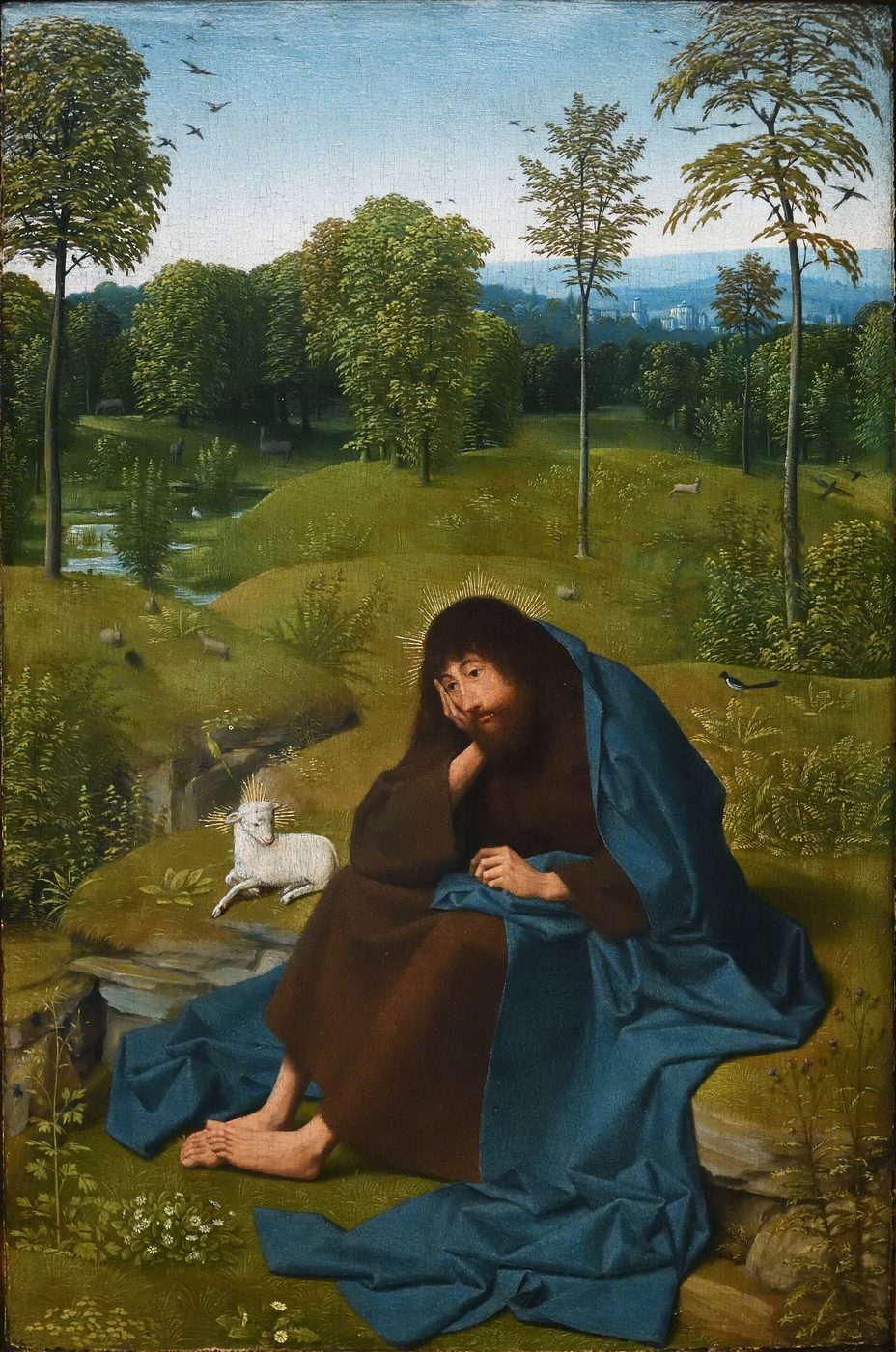
Gaudete Sunday: the Lord is near, so rejoice. Isaiah announces good news for the poor, Mary sings her Magnificat, and John the Baptist insists he is not the light, only a witness to it.
Mass Readings
- First Reading Isaiah 61:1-2a, 10-11
- Responsorial Psalm Luke 1:46-48, 49-50, 53-54
- Second Reading 1 Thessalonians 5:16-24
- Gospel John 1:6-8, 19-28
Open the Mass Readings on USCCB.org →
First Reading Isaiah 61:1-2a, 10-11
The Spirit of the Lord anoints His servant to bring good news to the poor and freedom to captives.
Psalm Luke 1:46-54
Mary’s song: my soul proclaims the greatness of the Lord, who has looked upon His lowly servant.
Second Reading 1 Thessalonians 5:16-24
Rejoice always, pray without ceasing, give thanks in everything. God is faithful.
Gospel John 1:6-8, 19-28
John says he is not the Christ, only a voice in the desert preparing the way for the One among them.
Step Into the Story
Isaiah 61 comes from the last part of the book, written after the exiles returned from Babylon, likely in the late sixth century B.C. The prophet announces good news to the poor and “a year of favor from the Lord,” an echo of the jubilee in Leviticus 25, when every fiftieth year debts were forgiven and land went back to its families. Paul’s letter, written around 50 A.D., sets the day’s mood: “Rejoice always.” This is Gaudete Sunday, named for the Latin “Rejoice” that opens the Mass.
- 6 A.D.Rome rules Judea directly
- 14 A.D.Tiberius becomes emperor
- c. 18 A.D.Caiaphas becomes high priest
- 26 A.D.Pilate becomes prefect
- This week’s scene: 28 or 29 A.D.Priests question John
Ride down with the delegation from Jerusalem in the fifteenth year of Tiberius, 28 or 29 A.D. by our count. Priests and Levites, with Pharisees among them, leave the Temple city and drop some 3,400 feet in about fifteen miles of switchbacks to Jericho. Feel the air thicken and warm as the road falls through bare, tawny hills. Beyond the palms of Jericho lies the Jordan and Bethany beyond the Jordan, where the crowds have gone.
Push to the front with the questioners. Are you the Messiah? Elijah? The Prophet promised by Moses? Three times the Baptist says no. He is only a voice, he says, unworthy to untie the sandal strap of the one coming after him, a task left to slaves. Stand at the water’s edge, and look where he is looking: among you, he says, stands one you do not recognize. Wait for Him.
Encounter the Lord
Stand on the bank of the Jordan as the officials from Jerusalem fire their questions. Are you the Christ? Elijah? The Prophet? John answers no, no and no. He is only a voice. And yet there is joy in his answer, the joy of the best man who hears the bridegroom coming.
Today the Church tells us to rejoice, because Jesus is near. His heart is the heart of Isaiah 61: good news to the poor, healing for the brokenhearted, freedom for captives. Christian joy does not depend on everything going well. It depends on who is coming.
This week, live Paul’s three commands for one full day: rejoice always, pray without ceasing, give thanks in all circumstances. Before bed, write down five gifts from God that day.
Know Your Faith
- 114·the Holy Spirit in the life of Jesus
- 127·the Church, Bride of Christ
- 311·the fruits of the Holy Spirit
Christian Joy
God never ceases to call every person to seek Him and so find life and happiness (CCC 30). Joy is a fruit of the Holy Spirit (CCC 1832).
The Anointed Messiah
Jesus begins His preaching by making His own today’s passage: “The Spirit of the Lord God is upon me” (CCC 714).
Giving Thanks in All Things
Every joy and need can become matter for thanksgiving (CCC 2648). Tonight, write down five things you thank God for.
Key Takeaways
- Scripture
- Doctrine
- Sacraments
- Christian Life


- Christian Life: We rejoice because the Lord is near; Christian joy comes from Christ, not from our circumstances.
- Scripture: John the Baptist was not the Messiah; his role was to point others to Jesus, and ours is too.
- Christian Life: Joy is a gift of the Holy Spirit, and we can thank God in every situation.
Test Your Knowledge
True or false? Tap your answer.
Christian joy depends mainly on who is coming, not on circumstances going well.
True.
Joy is a fruit of the Holy Spirit.
True.
Jesus applied Isaiah 61, good news to the poor, to Himself.
True.
John the Baptist’s greatness lay in drawing attention to himself.
False: He insisted he was only a voice pointing to Christ.
Every joy and every need can become a reason for thanksgiving.
True.
Christians should rejoice only when life is going well.
False: Paul says rejoice always and give thanks in all circumstances.
God continually calls every person to seek Him and find happiness.
True.
Gaudete Sunday ends Advent early.
False: it is a pause for joy within Advent because the Lord is near.
Mary’s Magnificat praises God for lifting up the lowly.
True.
Being a witness to Christ requires claiming to be more than we are.
False: like John, we witness by pointing beyond ourselves.
Answers: 1 T · 2 T · 3 T · 4 F (He insisted he was only a voice pointing to Christ) · 5 T · 6 F (Paul says rejoice always and give thanks in all circumstances) · 7 T · 8 F (it is a pause for joy within Advent because the Lord is near) · 9 T · 10 F (like John, we witness by pointing beyond ourselves)
Journal Prompts
What is robbing me of joy right now? Have I brought it to God?
Like John, do I point to Christ, or do I want people to look at me?
What would it look like to give thanks in this circumstance?
When did I last feel God’s joy? What was I doing?
Talk to God
Lord, You are near. Fill me with Your joy. Teach me to rejoice always, to pray without ceasing and to give thanks in all things. Like John, let my whole life point beyond myself to You. Amen.