Sunday, March 7, 2027 · Year B
Fourth Sunday of Lent
God so loved the world
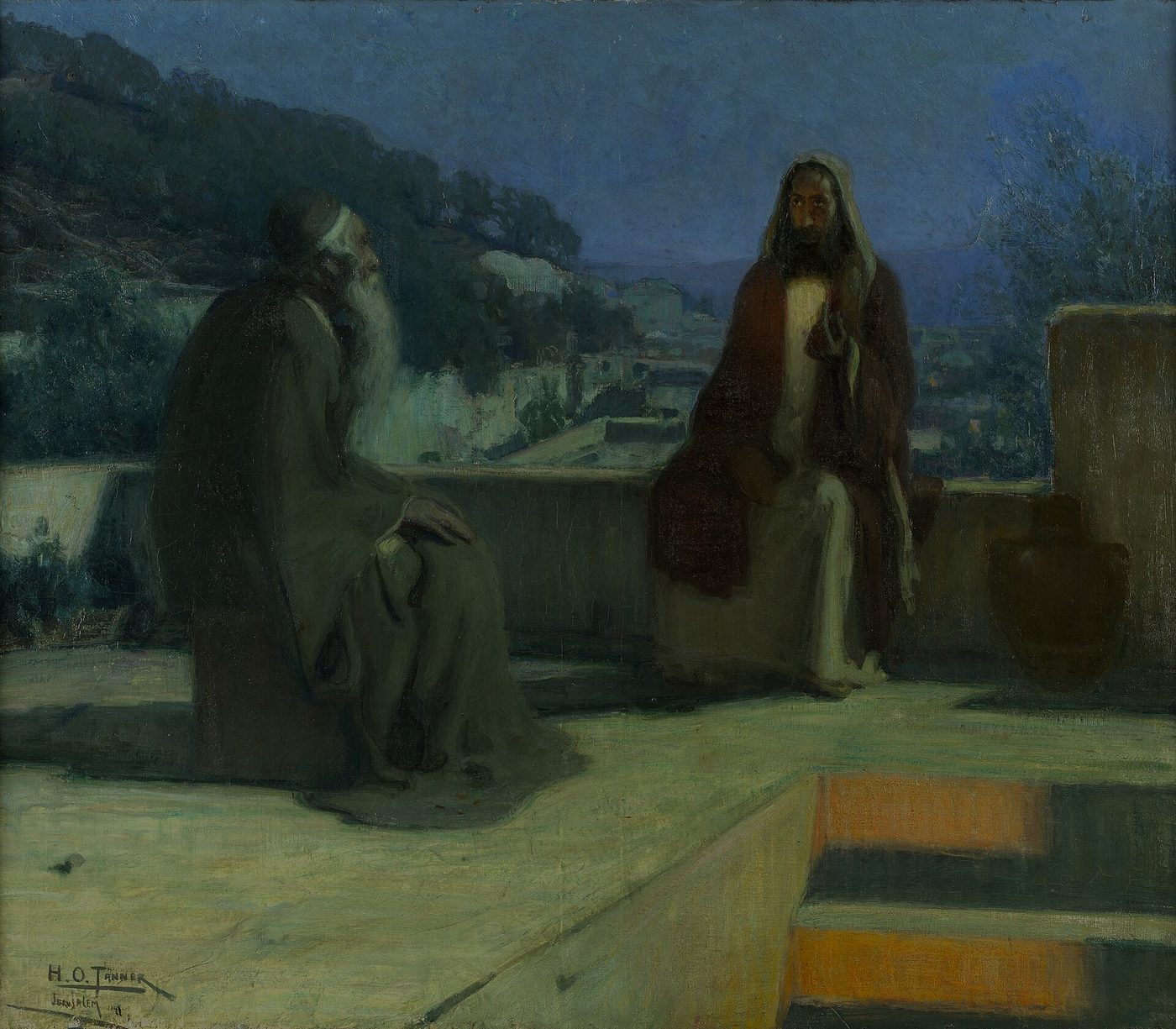
Israel’s infidelity ends in exile, but God moves Cyrus of Persia to let His people go home. Paul proclaims that we are saved by grace through faith. Jesus tells Nicodemus that God so loved the world that He gave His only Son, so that everyone who believes in Him might have eternal life.
Mass Readings
- First Reading 2 Chronicles 36:14-16, 19-23
- Responsorial Psalm Psalm 137:1-2, 3, 4-5, 6
- Second Reading Ephesians 2:4-10
- Gospel John 3:14-21
Open the Mass Readings on USCCB.org →
USCCB lists the Year B readings as primary for 2027. Parishes celebrating the Scrutinies with catechumens use the Year A readings instead (the Samaritan woman, the man born blind, the raising of Lazarus), which are always permitted.
First Reading 2 Chronicles 36:14-16, 19-23
The people mock God’s messengers, and Jerusalem falls to Babylon. After seventy years, Cyrus of Persia lets the exiles return to rebuild the Temple.
Psalm Psalm 137
Let my tongue be silenced if I ever forget you, Jerusalem!
Second Reading Ephesians 2:4-10
God, rich in mercy, brought us to life with Christ when we were dead in sin. By grace you have been saved through faith; it is the gift of God.
Gospel John 3:14-21
As Moses lifted up the serpent, so the Son of Man must be lifted up. God so loved the world that He gave His only Son, not to condemn the world but to save it.
Step Into the Story
Second Chronicles closes the Hebrew Bible, and it ends badly before it ends well. Nebuchadnezzar’s troops burned the Temple in 586 B.C. and marched the survivors to Babylon. Then in 539 B.C. Cyrus the Persian took Babylon, and his decree, quoted in the book’s last lines, sends them home. Cyrus left his own boast in clay, the Cyrus Cylinder, of returning deported peoples to their homes. Numbers 21 tells of the bronze serpent on a pole; the bitten who looked at it lived.
- 586 B.C.Babylon burns the Temple
- 539 B.C.Cyrus takes Babylon
- c. 20 B.C.Herod begins the Temple
- c. 18 A.D.Caiaphas becomes high priest
- This week’s scene: c. 28 A.D.Nicodemus comes by night
Go out into Jerusalem at night in the Passover season, probably of 28 A.D. The pilgrims have settled in for the night. The lanes are dark and narrow, the stone still giving off the day’s warmth into cool spring air. A dog barks. Lamplight shows faintly through a shutter. Somewhere above the city looms the Temple, pale against the stars.
A man walks quickly through the dark, his cloak drawn close: Nicodemus, a Pharisee and a member of the Sanhedrin, the council of seventy-one that runs Jewish affairs under Roman oversight. He does not want to be seen. Follow him to the house where Jesus is staying. Step in behind him, sit down in the lamplight, and listen to the Teacher answer a learned man’s questions.
Encounter the Lord
Sit in the dark with Nicodemus. He is a respected teacher, and he has come at night with questions. Jesus tells him something astonishing: “God so loved the world that he gave his only Son.”
This is the heart of the Gospel. God did not wait for us to become good. Paul says He brought us to life while we were dead in our sins. It is all grace. But grace calls for a response. Light has come into the world, and we must choose whether to come into the light or hide from it. God created you without your help, but He will not save you without your consent. Lent is an invitation to step out of the dark.
This week, look at a crucifix for a few minutes each day, as the Israelites looked at the bronze serpent. Bring into the light one thing you have been hiding, in prayer and in Confession.
Know Your Faith
- 67·what sin is
- 76·why God became man
- 112·Christ’s judgment of us and the world
Christ the Savior
The Word became flesh to save us by reconciling us with God, and so that we might know God’s love: “God so loved the world that he gave his only Son” (CCC 457-458). The doctrine of original sin is the reverse side of the Good News that Jesus is the Savior of all (CCC 389).
God Wants Us to Have Eternal Life
Even after our first parents’ sin, God did not abandon us; He wishes to give eternal life to all who seek salvation (CCC 55).
Judgment and Light
Christ is Lord of eternal life, yet the Son came not to judge but to save. By rejecting grace in this life, a person already judges himself (CCC 679).
Exile and the Cross
Israel’s infidelity ended in the exile, which was also a sign of God’s mysterious faithfulness and the beginning of restoration; the exile already stood in the shadow of the cross (CCC 710).
Key Takeaways
- Scripture
- Doctrine
- Sacraments
- Christian Life


- Doctrine: God the Father gave His Son because He loves the world, not because we earned it.
- Doctrine: We are saved by God’s grace through faith, and grace calls for our free response.
- Doctrine: Jesus came to save the world, not to condemn it, but people can reject His light.
- Scripture: Even in punishment and exile, God remained faithful to His people.
Test Your Knowledge
True or false? Tap your answer.
Cyrus of Persia allowed the Jewish exiles to return home.
True.
Paul teaches that we are saved by our own good works.
False: we are saved by grace through faith; it is God’s gift (Eph 2:8).
Jesus compares His being lifted up to Moses lifting up the bronze serpent.
True.
God sent His Son mainly to condemn the world.
False: He sent Him to save the world (Jn 3:17).
God will save us without any free response on our part.
False: He does not will to save us without us, CCC 1847.
By rejecting grace in this life, a person already judges himself.
True.
Nicodemus came to Jesus at night.
True.
The exile already stood in the shadow of the cross, according to the Catechism.
True.
Laetare Sunday is the Fourth Sunday of Lent.
True.
Original sin has nothing to do with the Good News of salvation.
False: original sin is the reverse side of the Good News that Jesus is Savior of all, CCC 389.
Answers: 1 T · 2 F (we are saved by grace through faith; it is God’s gift (Eph 2:8)) · 3 T · 4 F (He sent Him to save the world (Jn 3:17)) · 5 F (He does not will to save us without us, CCC 1847) · 6 T · 7 T · 8 T · 9 T · 10 F (original sin is the reverse side of the Good News that Jesus is Savior of all, CCC 389)
Journal Prompts
Do I truly believe that God loves me, not because I have earned it?
What am I keeping in the dark that I need to bring into Christ’s light?
How have I responded to God’s grace this Lent so far?
Where have I experienced an “exile” in my life, and how was God faithful there?
Talk to God
Father, You so loved the world that You gave Your only Son. I did not earn this love; I receive it with gratitude. Draw me out of the darkness into Your light, and let me live as Your child. Amen.