Sunday, March 14, 2027 · Year B
Fifth Sunday of Lent
Unless a grain of wheat falls to the ground and dies
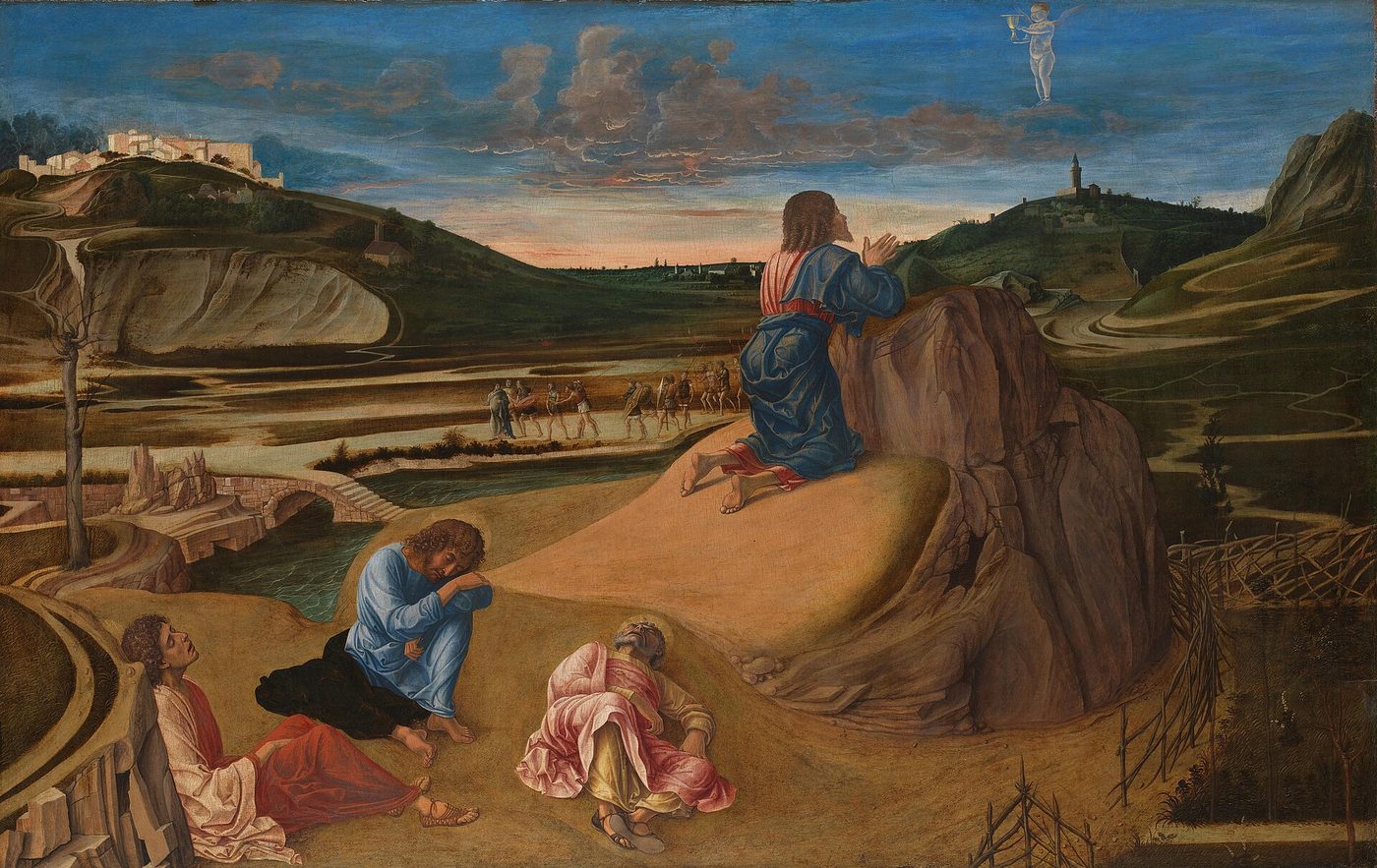
Jeremiah foretells a new covenant written on the heart. Hebrews says Christ offered prayers with loud cries and tears and learned obedience through suffering. When some Greeks ask to see Jesus, He speaks of the grain of wheat that must die to bear fruit.
Mass Readings
- First Reading Jeremiah 31:31-34
- Responsorial Psalm Psalm 51:3-4, 12-13, 14-15
- Second Reading Hebrews 5:7-9
- Gospel John 12:20-33
Open the Mass Readings on USCCB.org →
USCCB lists the Year B readings as primary for 2027. Parishes celebrating the Scrutinies with catechumens use the Year A readings instead (the Samaritan woman, the man born blind, the raising of Lazarus), which are always permitted.
First Reading Jeremiah 31:31-34
The days are coming, says the Lord, when I will make a new covenant. I will write My law on their hearts, and I will remember their sin no more.
Psalm Psalm 51
Create a clean heart in me, O God.
Second Reading Hebrews 5:7-9
In the days of His flesh, Christ offered prayers with loud cries and tears. Son though He was, He learned obedience from what He suffered.
Gospel John 12:20-33
Greeks ask to see Jesus. He says His hour has come: unless a grain of wheat dies, it remains alone. When He is lifted up, He will draw all to Himself.
Step Into the Story
Jeremiah preached in Jerusalem for some forty years, from around 627 B.C. until the city fell to Babylon in the summer of 586 B.C. He was beaten, locked in stocks and lowered into a muddy cistern. Yet at the darkest hour he promised a “new covenant,” written on hearts, the only time the phrase appears in the Old Testament. At the Last Supper Jesus would take it up: “the new covenant in my blood.”
- c. 627 B.C.Jeremiah begins preaching
- 586 B.C.Jerusalem falls to Babylon
- c. 20 B.C.Herod begins the Temple
- 26 A.D.Pilate becomes prefect
- This week’s scene: c. 30 A.D.Greeks ask to see Jesus
Enter the Temple’s outer court at Passover, days before the Passion, in the year 30 A.D. on the usual dating. The court is packed with pilgrims, and among them are some Greeks, probably God-fearers, Gentiles who worship Israel’s God. Walk with them to the low stone balustrade that rings the inner courts. Read the notice set into it, in Greek: any foreigner who goes farther will have himself to blame for the death that follows. This is as close as they can come.
Watch them turn to Philip, a man with a Greek name from Bethsaida in Galilee. “Sir, we would like to see Jesus.” Philip goes to Andrew; Andrew and Philip go to Jesus. Follow them through the crowd. The Greeks wait behind you. Stand among the disciples, close enough to see His face, and listen to how He answers.
Encounter the Lord
Stand near Jesus in the crowded Temple courts. Some foreigners have come to Philip with a simple request: “Sir, we would like to see Jesus.” Jesus answers with a strange image: a grain of wheat that falls into the ground and dies.
If they want to see Him, they must look at the cross. Jesus does not pretend it is easy. “I am troubled now,” He says, and Hebrews tells of His loud cries and tears. But He does not ask to be saved from this hour; He came for it. His death is the seed of the new covenant Jeremiah promised, a covenant written on the heart. Every real life in Christ follows this pattern: what we let die for love becomes fruitful.
This week, choose one small way to “die” to yourself each day: a sacrifice of time, comfort or preference, offered quietly for someone else. Pray the Stations of the Cross once before Holy Week.
Know Your Faith
- 98·whether God willed the death of His Son
- 102·why we too take up our cross
- 109·what Jesus’ Ascension means
Christ’s Life Offered to the Father
From the first moment of His Incarnation, the Son embraced the Father’s plan of salvation (CCC 606). His whole life was inspired by the desire to embrace the Father’s plan: “For this purpose I have come to this hour” (CCC 607).
The Hour of His Glory
Above all in His death and Resurrection, Jesus accomplished the coming of His kingdom: “When I am lifted up from the earth, I will draw all to myself” (CCC 542). His lifting up on the cross begins His lifting up in the Ascension (CCC 662).
The New Covenant
Through the prophets God formed His people in the hope of a new and everlasting covenant written on their hearts (CCC 64). In Jesus the Law is no longer written on tablets of stone but on the heart (CCC 580).
Taking Up the Cross
Christ calls His disciples to take up their cross and follow Him, and He associates us with His redeeming sacrifice (CCC 618).
Key Takeaways
- Scripture
- Doctrine
- Sacraments
- Christian Life


- Doctrine: Jesus freely accepted His death because He came to do His Father’s will.
- Doctrine: Jesus’ death on the cross is the source of new life, like a seed that dies and bears fruit.
- Scripture: The new covenant promised by Jeremiah is fulfilled in Jesus.
- Christian Life: Christians are called to take up their cross and share in Christ’s self-giving love.
Test Your Knowledge
True or false? Tap your answer.
Jeremiah promised a new covenant written on the heart.
True.
Hebrews teaches that Jesus felt no fear or anguish before His Passion.
False: He offered prayers with loud cries and tears.
Jesus asked the Father to save Him from His hour.
False: He said, “For this purpose I have come to this hour”, CCC 607.
Jesus’ lifting up on the cross begins His lifting up in the Ascension.
True.
The request of the Greeks to see Jesus marks the arrival of His hour in John’s Gospel.
True.
The phrase “new covenant” appears many times in the Old Testament.
False: Jeremiah 31 is the only place it appears in the Old Testament.
Christ calls His disciples to take up their cross and follow Him.
True.
The Son embraced the Father’s plan of salvation from the first moment of His Incarnation.
True.
At the Last Supper Jesus spoke of the new covenant in His blood.
True.
According to St. Rose of Lima, there is no ladder to heaven apart from the cross.
True.
Answers: 1 T · 2 F (He offered prayers with loud cries and tears) · 3 F (He said, “For this purpose I have come to this hour”, CCC 607) · 4 T · 5 T · 6 F (Jeremiah 31 is the only place it appears in the Old Testament) · 7 T · 8 T · 9 T · 10 T
Journal Prompts
If someone said to me, “We would like to see Jesus,” where would I point them?
What is God asking me to let “die” so that something better can grow?
When have I prayed with “loud cries and tears”? How did God answer?
How can I prepare my heart for Holy Week?
Talk to God
Lord Jesus, You accepted Your hour and gave Your life like a grain of wheat. Write Your law on my heart. Teach me to die to myself for love, so that my life may bear fruit for Your kingdom. Amen.