Friday, March 26, 2027 · Day of Fasting and Abstinence
Good Friday of the Lord’s Passion
It is finished
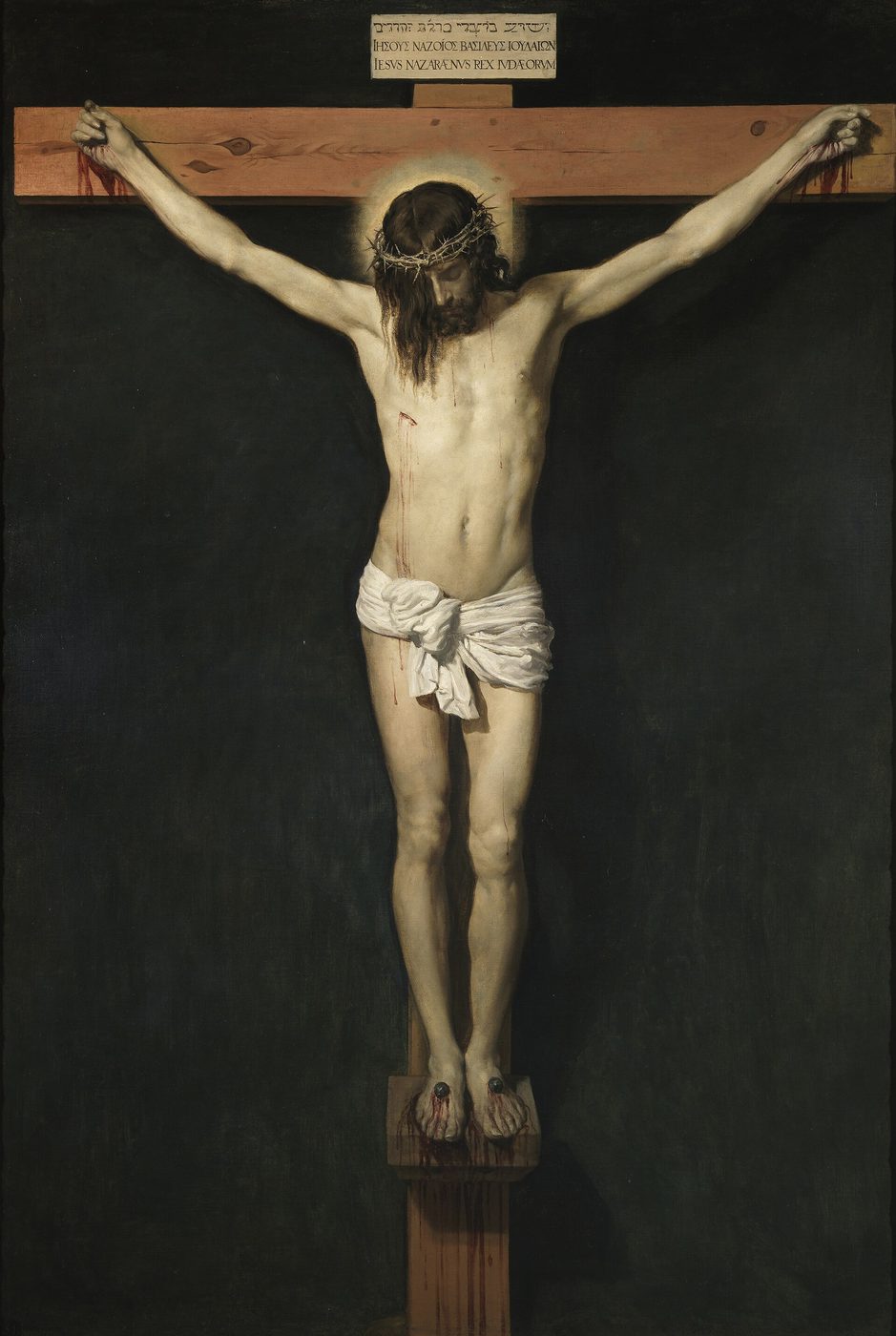
The Church does not celebrate Mass today. She listens to the Passion according to John, prays for the whole world, venerates the Cross and receives Communion consecrated the night before. Isaiah’s suffering Servant bears our sins, and Jesus, our High Priest, offers Himself.
Mass Readings
- First Reading Isaiah 52:13-53:12
- Responsorial Psalm Psalm 31:2, 6, 12-13, 15-16, 17, 25
- Second Reading Hebrews 4:14-16; 5:7-9
- Gospel John 18:1-19:42
Open the Mass Readings on USCCB.org →
First Reading Isaiah 52:13-53:12
The Servant of the Lord is despised, struck and pierced for our sins. Like a lamb led to the slaughter, he does not open his mouth. By his wounds we are healed, and through his suffering many will be made righteous.
Psalm Psalm 31
Father, into Your hands I commend my spirit.
Second Reading Hebrews 4:14-16; 5:7-9
We have a great High Priest who sympathizes with our weakness, tested in every way yet without sin. In His suffering He learned obedience and became the source of eternal salvation for all who obey Him.
Gospel John 18:1-19:42
Jesus is arrested in the garden, denied by Peter, tried before Annas, Caiaphas and Pilate, and crucified as King of the Jews. He entrusts His mother to the beloved disciple, says “It is finished,” and hands over His spirit. A soldier pierces His side, and blood and water flow out.
Step Into the Story
Isaiah’s fourth Servant Song, likely written during or soon after the Babylonian exile in the sixth century B.C., describes a man “spurned and avoided,” pierced for our offenses, led like a lamb to the slaughter. Hebrews calls Jesus a high priest able to sympathize with our weaknesses. Crucifixion was built to be slow, public and shameful; a heel bone from a Jerusalem tomb of this period, still pierced by an iron nail, shows how it was done.
- 6th c. B.C.Isaiah’s Suffering Servant
- 63 B.C.Pompey takes Jerusalem
- 14 A.D.Tiberius becomes emperor
- 26 A.D.Pilate becomes prefect
- This week’s scene: 30 or 33 A.D.Jesus before Pilate
Stand on the stone pavement outside the Praetorium, probably Herod’s old palace on the city’s west side, in 30 or 33 A.D. Pontius Pilate, prefect of Judea from 26 to 36 A.D., takes the judgment seat at the place called Gabbatha, “the Pavement.” It is the day of Preparation, about noon, the sun high. Across the city, in the Temple, the Passover lambs are being slaughtered. Hear the crowd. Smell the dust and the sweat of soldiers in leather and iron.
Then follow the procession out through the gate to Golgotha, “Place of the Skull,” just outside the walls, beside the road where passers-by can read the charge. Find your place near the cross with Mary His Mother, her sister, Mary of Clopas, Mary Magdalene and the beloved disciple. Stay with them, and do not look away.
Encounter the Lord
Stand at the foot of the Cross with Mary and the beloved disciple. Look at Him. He has been whipped, crowned with thorns and nailed to the wood. He could come down, but He stays. He says, “I thirst,” and then, “It is finished.”
St. Francis reminds us that we cannot watch the Passion as spectators. My sins are part of the reason He is there. And yet He is not there to accuse me. He is there because He loves me to the end. Isaiah says that by His wounds we are healed. The love that takes the nails is greater than all the sin that drives them. Hebrews says you can approach this throne of grace with confidence, to receive mercy.
Today, come forward to venerate the Cross. As you kneel or kiss the wood, tell Him plainly what you are sorry for, and thank Him for what He has done for you.
Know Your Faith
- 96·why Jesus was condemned to death
- 98·whether God willed the death of His Son
- 101·why Jesus redeemed us on the Cross
Why He Suffered
Jesus’ violent death was not the result of chance but part of the mystery of God’s plan (CCC 599). Sinners were the authors of all the sufferings the Redeemer endured, and the Church imputes to Christians the gravest responsibility for His torments (CCC 598).
A Sacrifice of Love
It is love “to the end” that gives Christ’s sacrifice its value as redemption and atonement. He knew and loved us all when He offered His life (CCC 616). His sacrifice is unique; it completes and surpasses all other sacrifices (CCC 613-614).
Our Share in His Passion
Christ calls His disciples to take up their cross and follow Him (CCC 618). Justification has been merited for us by the Passion of Christ, whose blood has become the instrument of atonement for the sins of all (CCC 1992).
The Obedient Servant
By His obedience unto death, Jesus fulfilled the role of the suffering Servant who bore the sins of many (CCC 615). He freely embraced the Father’s plan of redeeming love (CCC 606-607).
Key Takeaways
- Scripture
- Doctrine
- Sacraments
- Christian Life


- Doctrine: Jesus freely accepted His death on the Cross out of love for the Father and for us.
- Doctrine: All sinners, including us, share responsibility for the sufferings of Christ.
- Doctrine: The death of Christ is the one perfect sacrifice that reconciles us with God.
- Christian Life: Good Friday is a day of fasting and abstinence, and there is no Mass.
Test Your Knowledge
True or false? Tap your answer.
Mass is not celebrated on Good Friday.
True.
The Church teaches that the Jewish people as a whole are guilty of Jesus’ death.
False: the Church imputes the gravest responsibility to all sinners, especially Christians, CCC 597-598.
Isaiah’s suffering Servant is led like a lamb to the slaughter.
True.
Jesus’ death was an accident of history outside God’s plan.
False: it was part of the mystery of God’s plan, CCC 599.
In John’s Gospel, Jesus entrusts His mother to the beloved disciple.
True.
Christ’s sacrifice on the Cross needs to be completed by other sacrifices.
False: it completes and surpasses all other sacrifices, CCC 614.
Good Friday is a day of fasting and abstinence.
True.
The Letter to the Hebrews teaches that Jesus is a High Priest who can sympathize with our weakness.
True.
The Good Friday liturgy includes the Adoration of the Cross.
True.
Jesus died only for those who already believed in Him.
False: Christ died for all without exception, CCC 605.
Answers: 1 T · 2 F (the Church imputes the gravest responsibility to all sinners, especially Christians, CCC 597-598) · 3 T · 4 F (it was part of the mystery of God’s plan, CCC 599) · 5 T · 6 F (it completes and surpasses all other sacrifices, CCC 614) · 7 T · 8 T · 9 T · 10 F (Christ died for all without exception, CCC 605)
Journal Prompts
Which moment of the Passion moves me most, and why?
Where do I see my own sins in the story of the Passion?
What cross is Jesus asking me to carry with Him right now?
What do I want to say to Jesus as I venerate the Cross?
Talk to God
Lord Jesus, You were pierced for my sins and crushed for my offenses. By Your wounds heal me. I am sorry for every sin that brought You to the Cross. Thank You for loving me to the end. Amen.