Sunday, April 11, 2027 · Year B
Third Sunday of Easter
He opened their minds to understand the Scriptures
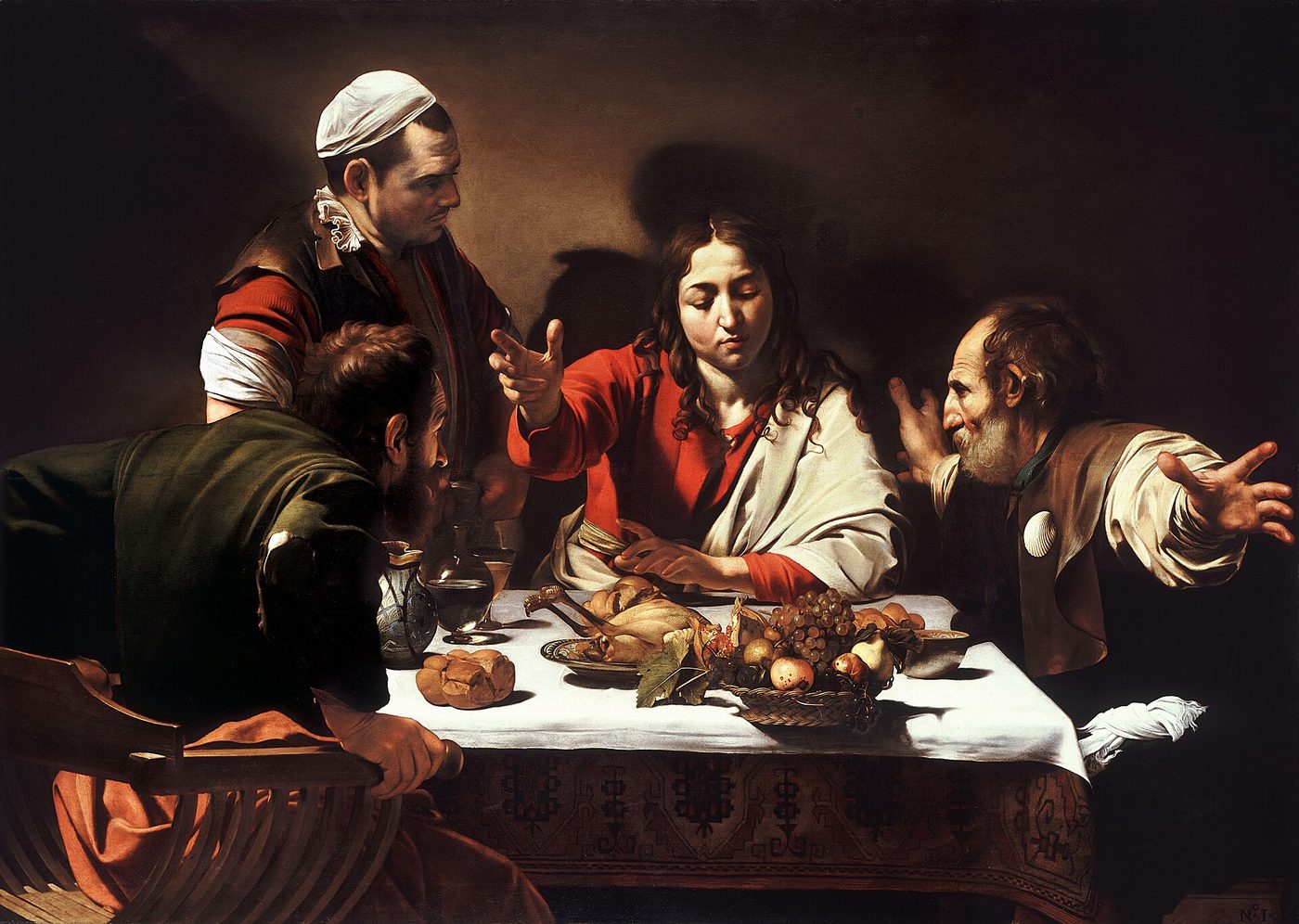
The two disciples back from Emmaus are telling how they recognized Jesus in the breaking of bread when He Himself stands among them. He eats a piece of fish in front of them and opens their minds to understand everything written about Him in the Scriptures.
Mass Readings
- First Reading Acts 3:13-15, 17-19
- Responsorial Psalm Psalm 4:2, 4, 7-8, 9
- Second Reading 1 John 2:1-5a
- Gospel Luke 24:35-48
Open the Mass Readings on USCCB.org →
First Reading Acts 3:13-15, 17-19
Peter tells the crowd in the Temple that they put to death the Author of life, whom God raised from the dead. They acted out of ignorance; now they must repent and be converted so that their sins may be wiped away.
Psalm Psalm 4
Lord, let Your face shine on us.
Second Reading 1 John 2:1-5a
If anyone sins, we have an Advocate with the Father, Jesus Christ the righteous one, the expiation for our sins and those of the whole world. Whoever keeps His word truly loves God.
Gospel Luke 24:35-48
Jesus appears to the disciples, who think they see a ghost. He shows His hands and feet, eats baked fish, and explains that everything written about Him in the Law, the Prophets and the Psalms had to be fulfilled. They are to be His witnesses to all nations.
Step Into the Story
Acts 3 moves to the Temple’s Beautiful Gate, possibly the great Nicanor Gate of Corinthian bronze, which Josephus says outshone gates plated with silver and gold. There Peter heals a man lame from birth, then tells the crowd in Solomon’s Portico that they “put to death the author of life,” adding, with remarkable charity, that they acted out of ignorance. The First Letter of John calls Jesus our “Advocate,” parakletos, the one who stands beside you in court.
- 14 A.D.Tiberius becomes emperor
- 26 A.D.Pilate becomes prefect
- c. 30 A.D.Jesus is crucified
- c. 30 A.D.Bread broken at Emmaus
- This week’s scene: c. 30 A.D.Jesus stands among them
Run with the two disciples from Emmaus on Easter night; 30 A.D. is the likeliest year. They have covered about seven miles back to Jerusalem in the dark, uphill most of the way, because they cannot keep what they saw to themselves. Feel the cold night air in your lungs.
Burst into the room with them. The Eleven are there with others, and the lamps are lit. Before the two can catch their breath, the others tell them: the Lord has risen and appeared to Simon. Then the two pour out their story of the road, and how they knew Him in the breaking of the bread. Smell the lamp oil and the remains of a meal of fish. Stand among them, still breathing hard, while they are still talking.
Encounter the Lord
Picture the room in Jerusalem late at night. Two breathless disciples have just walked seven miles back from Emmaus. Everyone is talking at once. Then Jesus is there. They are terrified. He asks for something to eat and eats it in front of them, slowly.
Jesus is patient with our slowness to believe. He does not only prove He is alive; He teaches. He opens their minds to understand the Scriptures, and they see that the Cross was not a defeat but the center of God’s plan. He does the same for you each Sunday: first He opens the Scriptures, then He gives Himself in the breaking of bread. And John reminds you that even when you sin, you have an Advocate with the Father.
This week, read Luke 24 slowly from beginning to end. Ask the risen Lord to open your mind to understand what you read.
Know Your Faith
- 16·the right way to read the Bible
- 107·the risen body of Jesus
- 213·the essential elements of the Mass
Christ Opens the Scriptures
Christianity is the religion of the Word of God, “not a written and mute word, but incarnate and living.” Christ must open our minds to understand the Scriptures (CCC 108). Christ Jesus is the center and heart of all Scripture (CCC 112).
Word and Table
The Mass follows the same movement as the Paschal meal of the risen Jesus with His disciples: walking with them He explained the Scriptures, and at table He took bread, blessed and broke it (CCC 1347). The Liturgy of the Word and the Liturgy of the Eucharist form one single act of worship (CCC 1346).
Witnesses to the Nations
The faith of the first community is based on the witness of concrete men who knew the risen Christ (CCC 642). The risen body of Jesus is real, not a ghost, yet it has the new properties of a glorious body (CCC 645).
Our Advocate with the Father
Christ did not live His life for Himself but for us. He is still “our advocate with the Father,” who always lives to make intercession for us (CCC 519, 2634).
Key Takeaways
- Scripture
- Doctrine
- Sacraments
- Christian Life


- Scripture: The risen Jesus explained that His suffering and Resurrection fulfilled the Scriptures.
- Scripture: Christ is the key to understanding the whole Bible, Old Testament and New.
- Sacraments: Every Mass has two parts: the Liturgy of the Word and the Liturgy of the Eucharist.
- Doctrine: Jesus is our Advocate with the Father when we sin.
Test Your Knowledge
True or false? Tap your answer.
Jesus ate a piece of baked fish in front of His disciples.
True.
The disciples immediately recognized Jesus and felt no fear.
False: they were startled and thought they were seeing a ghost.
“The Law, the Prophets and the Psalms” refers to the whole of the Hebrew Scriptures.
True.
The Catechism describes Christianity as a “religion of the book.”
False: it is the religion of the Word of God, incarnate and living, CCC 108.
Peter said the crowd had acted out of ignorance.
True.
The Liturgy of the Word and the Liturgy of the Eucharist form one act of worship.
True.
The First Letter of John calls Jesus our Advocate with the Father.
True.
The risen body of Jesus had no new properties.
False: it possessed the new properties of a glorious body, CCC 645.
Jesus sent the disciples to preach repentance to all the nations.
True.
The Old Testament has no connection to Christ.
False: Christ is the center and heart of all Scripture, CCC 112.
Answers: 1 T · 2 F (they were startled and thought they were seeing a ghost) · 3 T · 4 F (it is the religion of the Word of God, incarnate and living, CCC 108) · 5 T · 6 T · 7 T · 8 F (it possessed the new properties of a glorious body, CCC 645) · 9 T · 10 F (Christ is the center and heart of all Scripture, CCC 112)
Journal Prompts
When has a passage of Scripture suddenly opened up for me?
How attentively do I listen to the readings at Mass?
Is there a hardship in my life that I need to see in the light of the Cross?
Who could I tell about what the risen Lord has done for me?
Talk to God
Risen Lord Jesus, You opened the minds of Your disciples to understand the Scriptures. Open my mind and heart as well. Make me attentive to Your word, faithful at Your table, and a witness of Your Resurrection. Amen.