Sunday, May 30, 2027 · Solemnity
The Most Holy Body and Blood of Christ (Corpus Christi)
This is my blood of the covenant
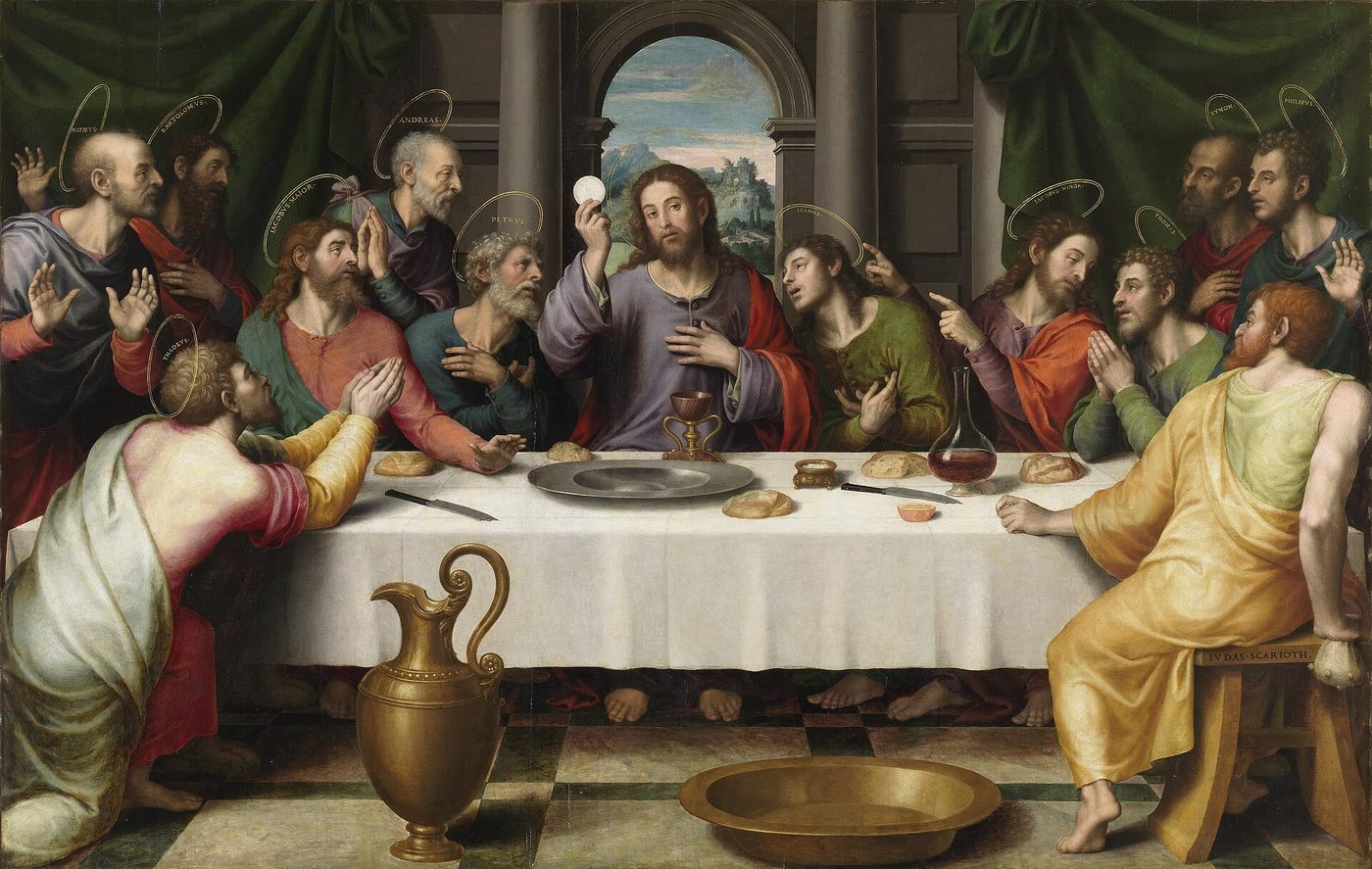
At Sinai Moses seals the covenant by sprinkling the people with blood: “This is the blood of the covenant.” At the Last Supper Jesus takes the cup and says, “This is my blood of the covenant, which will be shed for many.” Christ, the High Priest, has entered the sanctuary with His own blood.
Mass Readings
- First Reading Exodus 24:3-8
- Responsorial Psalm Psalm 116:12-13, 15-16, 17-18
- Second Reading Hebrews 9:11-15
- Gospel Mark 14:12-16, 22-26
Open the Mass Readings on USCCB.org →
First Reading Exodus 24:3-8
Moses reads the book of the covenant, and the people promise, “All that the Lord has said, we will heed and do.” He offers sacrifices and sprinkles the blood on the altar and on the people.
Psalm Psalm 116
I will take the cup of salvation, and call on the name of the Lord.
Second Reading Hebrews 9:11-15
Christ came as High Priest and entered the sanctuary once for all, not with the blood of goats and calves but with His own blood, obtaining eternal redemption. He is mediator of a new covenant.
Gospel Mark 14:12-16, 22-26
The disciples prepare the Passover in a large upper room. During the meal Jesus takes bread, blesses it, breaks it and says, “Take it; this is my body.” He takes the cup: “This is my blood of the covenant, which will be shed for many.”
Step Into the Story
At the foot of Sinai Moses builds an altar with twelve pillars, one for each tribe, and splashes half the blood of the sacrifice on the altar and half on the people: “This is the blood of the covenant.” To Israel blood meant life, and sharing it made two parties one family. Hebrews, probably written before 70 A.D., contrasts the high priest’s yearly entry with animal blood and Christ’s entry once for all with His own. Urban IV extended this feast to the whole Church in 1264.
- 13th c. B.C.Israel’s first Passover
- c. 20 B.C.Herod begins the Temple
- c. 18 A.D.Caiaphas becomes high priest
- 26 A.D.Pilate becomes prefect
- This week’s scene: c. 30 A.D.Preparing the Passover
Walk through Jerusalem on the first day of Unleavened Bread, the day the Passover lambs are sacrificed. The year is most likely 30 A.D. All afternoon in the Temple courts the Levites chant the Hallel psalms as the priests pass basins of blood toward the altar. By evening the smell of roasting lamb hangs over the whole city. Watch for a man carrying a water jar, an easy signal where hauling water was usually women’s work. Follow him.
Climb to a large upper room, furnished and ready. Recline with the Twelve as the meal goes on. Then see Jesus take a loaf of unleavened bread in His hands and bless it. Be still, and watch.
Encounter the Lord
Sit in the upper room, among the cushions and the lamps of the Passover meal. Jesus takes the bread in His hands and breaks it: “Take it; this is my body.” Then He lifts the cup. The words are new: “my blood of the covenant.”
At Sinai, the blood of animals bound Israel to God. In the upper room and on the Cross, Jesus offers His own Blood and binds you to God in a covenant that cannot be broken. Every Mass makes that covenant present. When you receive Communion, you receive Him, Body, Blood, soul and divinity. St. Ignatius calls it the medicine of immortality. It is the food that makes you live forever.
This week, spend time before the Blessed Sacrament, at adoration or in a quiet church. If your parish has a Corpus Christi procession, walk in it.
Know Your Faith
- 208·what the Holy Eucharist is
- 216·how Christ is present in the Eucharist
- 221·how Holy Communion changes me
Source and Summit
The Eucharist is the source and summit of the Christian life; in it is contained the whole spiritual good of the Church, namely Christ Himself (CCC 1324). In the Eucharist Christ is present, Body, Blood, soul and divinity, truly, really and substantially (CCC 1374).
The Sacrifice of the New Covenant
The Eucharist makes present the sacrifice of the cross; Christ’s blood is “the blood of the covenant, which is poured out for many for the forgiveness of sins” (CCC 1365-1366). The sacrifice of Christ and the sacrifice of the Eucharist are one single sacrifice (CCC 1367).
Communion and Unity
The Eucharist makes the Church; those who receive it are united more closely to Christ and to one another in one body (CCC 1396). To receive Communion we must be in a state of grace (CCC 1385).
Food for the Journey
Holy Communion preserves, increases and renews the life of grace received at Baptism (CCC 1392). The Eucharist is a pledge of future glory and an anticipation of heaven (CCC 1402-1405).
Key Takeaways
- Scripture
- Doctrine
- Sacraments
- Christian Life


- Sacraments: The Eucharist is truly the Body and Blood of Christ, not a symbol.
- Sacraments: Each Mass makes present the one sacrifice of Christ on the Cross.
- Sacraments: To receive Communion worthily, a Catholic must be free of mortal sin.
- Sacraments: Holy Communion unites us more closely to Christ and to one another.
Test Your Knowledge
True or false? Tap your answer.
At Sinai Moses sprinkled blood on the altar and on the people.
True.
Jesus said at the Last Supper, “This is my blood of the covenant.”
True.
The Catechism teaches that the Eucharist is a symbol only.
False: Christ is truly, really and substantially present, CCC 1374.
Hebrews says Christ entered the sanctuary with the blood of goats and calves.
False: He entered with His own blood (Heb 9:12).
A person conscious of mortal sin should go to Confession before receiving Communion.
True.
The Eucharist is the source and summit of the Christian life.
True.
St. Thomas Aquinas wrote the hymns for the feast of Corpus Christi.
True.
Holy Communion separates us from other Christians in the Church.
False: it unites us into one body, CCC 1396.
The Eucharist is a pledge of future glory.
True.
The disciples prepared the Passover in a large upper room.
True.
Answers: 1 T · 2 T · 3 F (Christ is truly, really and substantially present, CCC 1374) · 4 F (He entered with His own blood (Heb 9:12)) · 5 T · 6 T · 7 T · 8 F (it unites us into one body, CCC 1396) · 9 T · 10 T
Journal Prompts
How do I prepare myself before receiving Communion?
What does it mean to me that Jesus made a covenant with me in His own Blood?
When did I last spend time in adoration?
How does receiving the Eucharist change the way I treat others?
Talk to God
Lord Jesus, truly present in the Blessed Sacrament, I adore You. Thank You for giving me Your Body and Blood. Make me worthy to receive You, and let Your life grow in me now and forever. Amen.