Sunday, September 12, 2027 · Year B
Twenty-fourth Sunday in Ordinary Time
Who do you say that I am?
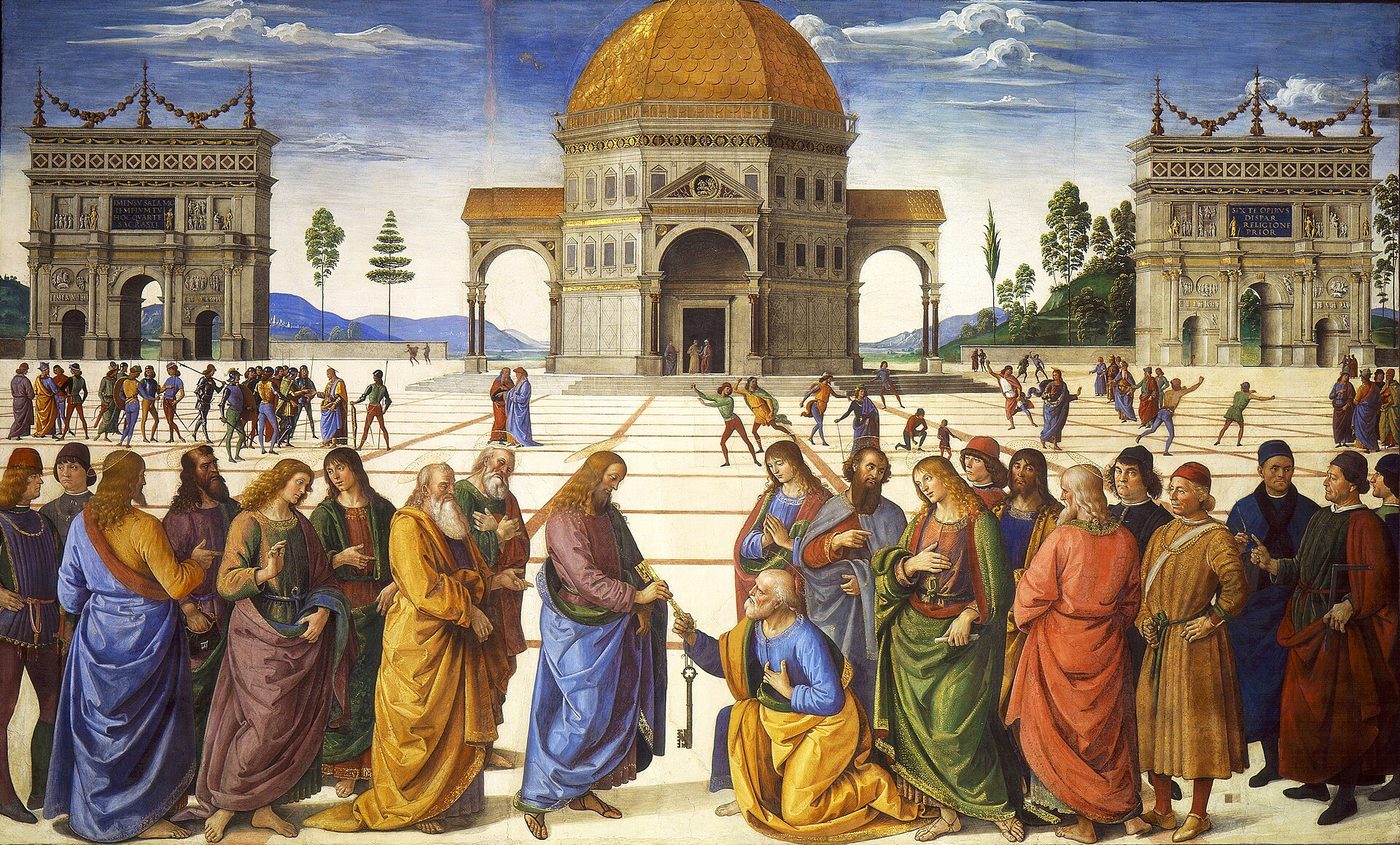
Isaiah’s Servant gives his back to those who beat him, trusting that God will help him. At Caesarea Philippi, Jesus asks, “Who do you say that I am?” Peter answers, “You are the Christ.” Then Jesus teaches that He must suffer and die, and that whoever wishes to follow Him must take up his cross.
Mass Readings
- First Reading Isaiah 50:5-9a
- Responsorial Psalm Psalm 116:1-2, 3-4, 5-6, 8-9
- Second Reading James 2:14-18
- Gospel Mark 8:27-35
Open the Mass Readings on USCCB.org →
First Reading Isaiah 50:5-9a
The Servant says: I gave my back to those who beat me, my cheeks to those who plucked my beard; I did not shield my face from buffets and spitting. The Lord God is my help; who will prove me wrong?
Psalm Psalm 116
I will walk before the Lord, in the land of the living.
Second Reading James 2:14-18
What good is it if someone says he has faith but does not have works? If a brother or sister has nothing to wear or eat and you say, “Go in peace, keep warm,” but give them nothing, what good is it? Faith without works is dead. I will demonstrate my faith to you from my works.
Gospel Mark 8:27-35
Jesus asks His disciples who people say He is, then, “Who do you say that I am?” Peter says, “You are the Christ.” Jesus teaches that the Son of Man must suffer, be rejected, be killed and rise. Peter rebukes Him, and Jesus rebukes Peter: “Get behind me, Satan.” Whoever wishes to come after Him must deny himself and take up his cross.
Step Into the Story
Isaiah’s third Servant Song, likely written during the exile, draws a servant who gives his back to those who beat him and sets his face like flint. King Herod built a temple of white marble to Augustus near the springs of the Jordan, and around 2 B.C. his son Philip rebuilt the town there and named it for Caesar and, modestly, himself: Caesarea Philippi.
- 27 B.C.Octavian becomes Augustus
- 4 B.C.Philip rules the north
- c. 2 B.C.Philip founds Caesarea Philippi
- 14 A.D.Tiberius becomes emperor
- This week’s scene: c. 29 A.D.Peter’s confession
Walk north with Jesus and the Twelve, probably in 29 A.D., into the villages of Caesarea Philippi, in Philip’s territory at the foot of Mount Hermon. Hear water everywhere: one of the Jordan’s sources gushes from the base of a great cliff. Look up at the cave sacred to the Greek god Pan, the niches carved in the rock, and Herod’s marble temple to the emperor, shining white.
Pagan gods above you, the deified Caesar beside them. On the road among these villages Jesus asks, “Who do people say that I am?” Hear the answers: John the Baptist, Elijah, one of the prophets. Then He stops and turns to the Twelve. Stand with them in the sound of the rushing water, and wait to hear what Peter will say.
Encounter the Lord
Stand near the springs of Caesarea Philippi, surrounded by shrines to Pan and to Caesar. Jesus asks the question that every human being must answer: “Who do you say that I am?”
Peter gives the right answer and then immediately shows he does not understand it. He wants a Christ without a Cross. We often do the same. We want Jesus to fix our problems, not to call us to deny ourselves. But the way of Jesus passes through the Cross to the Resurrection. Losing your life for His sake is how you save it. James makes it practical: faith that is real shows itself in works of love. And St. Gregory of Nyssa reminds you that following Christ is a climb that never ends.
Answer Jesus’ question in your own words in prayer this week. Then identify one daily cross you can carry more willingly, offering it for someone you love.
Know Your Faith
- 73·why Jesus is called Christ
- 101·why Jesus redeemed us on the Cross
- 102·taking up our cross
The Path of the Servant
The Servant Songs announce the meaning of Jesus’ Passion and show how He will pour out the Holy Spirit (CCC 713). The Messiah would accomplish His mission through suffering (CCC 601).
He Suffered for Our Salvation
Jesus accepted Peter’s profession of faith but announced the coming Passion of the Son of Man (CCC 440). His violent death was part of God’s plan of salvation (CCC 599-601).
Taking Up the Cross
Christ calls His disciples to take up their cross and follow Him, associating them with His redeeming sacrifice (CCC 618). The way of perfection passes by way of the Cross; there is no holiness without renunciation and spiritual battle (CCC 2015).
Faith That Works
Faith without works is dead. Faith is manifested in works of charity, and the moral life of Christians is spiritual worship (CCC 1815, 2044-2046).
Key Takeaways
- Scripture
- Doctrine
- Sacraments
- Christian Life


- Doctrine: Every person must answer Jesus’ question, “Who do you say that I am?”
- Doctrine: Jesus is the Messiah who saved us by suffering, dying and rising.
- Christian Life: To follow Jesus, we must deny ourselves and take up our cross.
- Christian Life: Real faith shows itself in works of love.
Test Your Knowledge
True or false? Tap your answer.
Peter said to Jesus, “You are the Christ.”
True.
Peter immediately accepted Jesus’ teaching that He must suffer.
False: Peter rebuked Him.
Jesus said, “Get behind me, Satan,” to Peter.
True.
Caesarea Philippi had pagan shrines.
True.
James teaches that faith without works is dead.
True.
Jesus said that whoever wishes to save his life will save it.
False: whoever wishes to save his life will lose it (Mark 8:35).
Isaiah’s Servant hid his face from those who struck him.
False: he did not shield his face.
The Catechism says there is no holiness without renunciation and spiritual battle.
True.
Jesus’ death was part of God’s plan of salvation.
True.
Many expected the Messiah to be a political liberator.
True.
Answers: 1 T · 2 F (Peter rebuked Him) · 3 T · 4 T · 5 T · 6 F (whoever wishes to save his life will lose it (Mark 8:35)) · 7 F (he did not shield his face) · 8 T · 9 T · 10 T
Journal Prompts
How would I answer Jesus if He asked me, “Who do you say that I am?”
Where do I want a Christ without a Cross?
What cross is Jesus asking me to carry right now?
How does my faith show itself in works this week?
Talk to God
Lord Jesus, You are the Christ, the Son of the living God. Give me courage to follow You on the way of the Cross. Help me deny myself, carry my cross with love, and show my faith in works. Amen.