Sunday, September 26, 2027 · Year B
Twenty-sixth Sunday in Ordinary Time
Whoever is not against us is for us
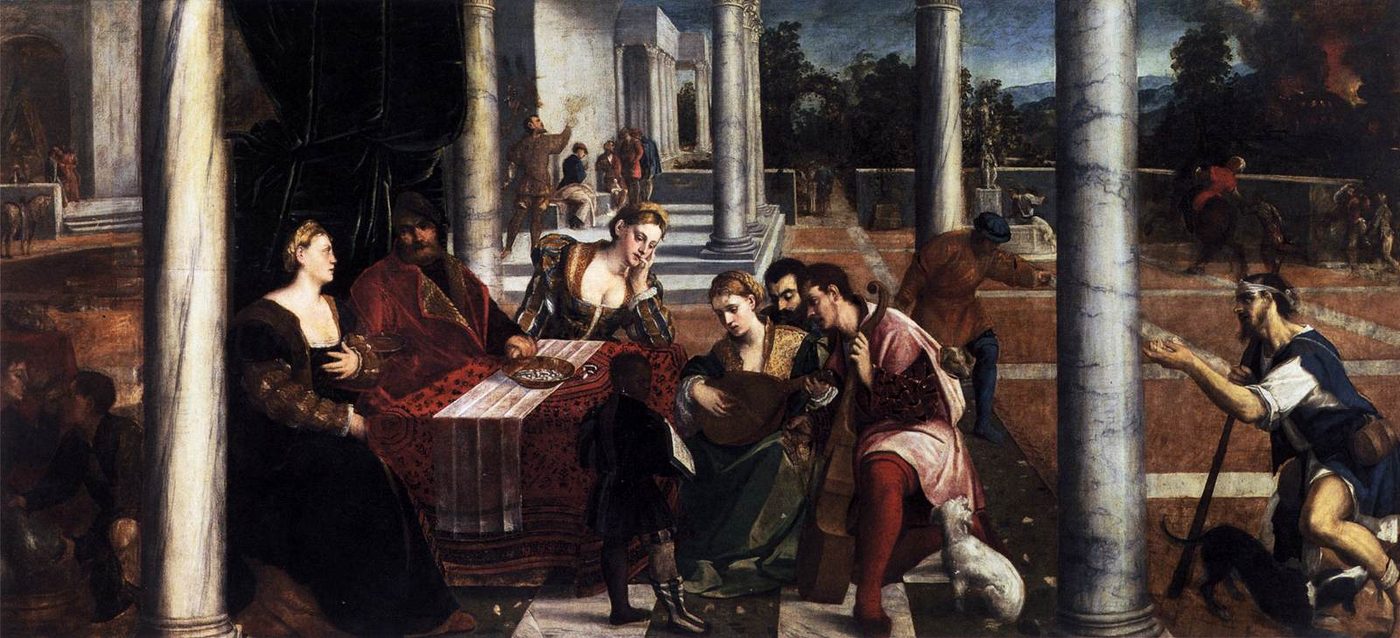
When two men prophesy outside the camp, Joshua wants them stopped, but Moses wishes all the people were prophets. John wants to stop a man driving out demons in Jesus’ name, and Jesus says, “Whoever is not against us is for us.” He warns against causing others to sin, and James warns the rich who exploit their workers.
Mass Readings
- First Reading Numbers 11:25-29
- Responsorial Psalm Psalm 19:8, 10, 12-13, 14
- Second Reading James 5:1-6
- Gospel Mark 9:38-43, 45, 47-48
Open the Mass Readings on USCCB.org →
First Reading Numbers 11:25-29
The Lord bestows some of the spirit on Moses on the seventy elders, and they prophesy. Eldad and Medad, who remained in the camp, also prophesy. Joshua asks Moses to stop them, but Moses says, “Would that all the people of the Lord were prophets!”
Psalm Psalm 19
The precepts of the Lord give joy to the heart.
Second Reading James 5:1-6
Weep, you rich, for your miseries. Your wealth has rotted. The wages you withheld from the workers who harvested your fields are crying aloud, and their cries have reached the ears of the Lord. You have lived in luxury and condemned the righteous.
Gospel Mark 9:38-43, 45, 47-48
John tells Jesus they tried to stop a man casting out demons in His name. Jesus says not to prevent him: whoever is not against us is for us, and whoever gives a cup of water in His name will not lose his reward. Whoever causes a little one to sin would be better thrown into the sea. If your hand or foot or eye causes you to sin, cut it off.
Step Into the Story
In the desert God takes some of the spirit on Moses and shares it with seventy elders. Two men, Eldad and Medad, missed the meeting but prophesy in the camp anyway. Young Joshua wants them stopped. Moses refuses: “Would that all the people of the Lord were prophets!” Gehenna was the Valley of Hinnom below Jerusalem’s walls, where Judah’s kings Ahaz and Manasseh burned children in sacrifice in the eighth and seventh centuries B.C. King Josiah defiled it to end the cult, and its name became a byword for hell.
- c. 622 B.C.Josiah defiles Topheth
- 4 B.C.Antipas rules Galilee
- 14 A.D.Tiberius becomes emperor
- c. 20 A.D.Antipas founds Tiberias
- This week’s scene: c. 29 A.D.Jesus warns against scandal
Stay in that house in Capernaum, the year probably 29 A.D., with the child still among the Twelve. Through the doorway you can see the courtyard: a fire pit, storage jars, and a big basalt grinding mill, the kind turned by a donkey, its upper stone weighing hundreds of pounds. Capernaum’s mills were cut from the black basalt of these hills.
John, one of the Sons of Thunder, speaks up, pleased with himself. They saw a man casting out demons in Jesus’ name, and they stopped him, because he was not one of them. Watch Jesus’ face. Then look again at the child, small and trusting, and at the millstone beyond. Sit very still among the disciples, and listen.
Encounter the Lord
Hear John’s complaint: “Teacher, we saw someone driving out demons in your name, and we tried to stop him because he does not follow us.” You can feel the possessiveness in his voice.
Jesus widens the circle. God’s grace is at work beyond the boundaries we draw, and we should rejoice wherever good is done in His name. At the same time He is fierce about sin, especially sin that harms the little ones. Cut out whatever leads you into sin. James adds a hard word for the rich: wealth gained by injustice condemns its owner. St. John Chrysostom says the goods we possess are not ours, but belong also to the poor.
Look honestly this week at one occasion of sin in your life and remove it. Then give generously to someone in need, as a matter of justice, not only charity.
Know Your Faith
- 131·what we must do for the unity of Christians
- 427·why there is no absolute right to private property
- 467·why Jesus asks for poverty in spirit
Seeking Unity
Many elements of sanctification and truth are found outside the visible structure of the Catholic Church; Christ’s Spirit uses them as means of salvation (CCC 819). The desire to recover the unity of all Christians is a gift of Christ and a call of the Holy Spirit (CCC 820-821).
The Danger of Riches
The goods of creation are destined for the whole human race (CCC 2402-2403). Love for the poor is incompatible with immoderate love of riches or their selfish use (CCC 2445). Wages withheld from workers cry out to heaven (CCC 1867, 2434).
Avoiding Scandal
Scandal is an attitude or behavior that leads another to do evil. It is grave when committed by those who teach or educate others (CCC 2284-2285). Anyone who uses power to lead others to do wrong becomes guilty of scandal (CCC 2287).
Jealousy
Jealousy and envy are among the works of the flesh that oppose the Spirit (CCC 1852). Detachment from riches is necessary for entering the kingdom (CCC 2544-2547).
Key Takeaways
- Scripture
- Doctrine
- Sacraments
- Christian Life


- Doctrine: God’s grace can work beyond the visible boundaries of the Church.
- Christian Life: Causing others, especially the young, to sin is a grave evil.
- Christian Life: We must remove whatever leads us into sin.
- Christian Life: Wealth gained by injustice condemns its owner, and our goods are meant to serve the poor.
Test Your Knowledge
True or false? Tap your answer.
Moses wished that all the Lord’s people were prophets.
True.
Jesus told John to stop the man casting out demons in His name.
False: He said not to prevent him.
Jesus said whoever is not against us is for us.
True.
James warns that the withheld wages of workers cry out to the Lord.
True.
Gehenna was a valley outside Jerusalem.
True.
The Catechism teaches that scandal is especially grave when committed by teachers and educators.
True.
Jesus literally commanded His followers to cut off their hands.
False: it is a Semitic exaggeration stressing the seriousness of sin.
Joshua asked Moses to stop Eldad and Medad.
True.
The Catechism teaches that the goods of creation are destined for the whole human race.
True.
St. John Chrysostom taught that our goods belong only to us.
False: he said they belong also to the poor, CCC 2446.
Answers: 1 T · 2 F (He said not to prevent him) · 3 T · 4 T · 5 T · 6 T · 7 F (it is a Semitic exaggeration stressing the seriousness of sin) · 8 T · 9 T · 10 F (he said they belong also to the poor, CCC 2446)
Journal Prompts
Where am I possessive about God’s work, as John was?
What occasion of sin do I need to cut out of my life?
Could my words or example lead anyone into sin?
How do I use my money? Do I treat giving as justice or only as charity?
Talk to God
Lord Jesus, You rejoice in every good done in Your name. Free me from jealousy and from love of riches. Give me courage to cut away what leads me into sin, and a generous heart toward the poor. Amen.