Sunday, October 17, 2027 · Year B
Twenty-ninth Sunday in Ordinary Time
The Son of Man did not come to be served but to serve and to give His life as a ransom for many
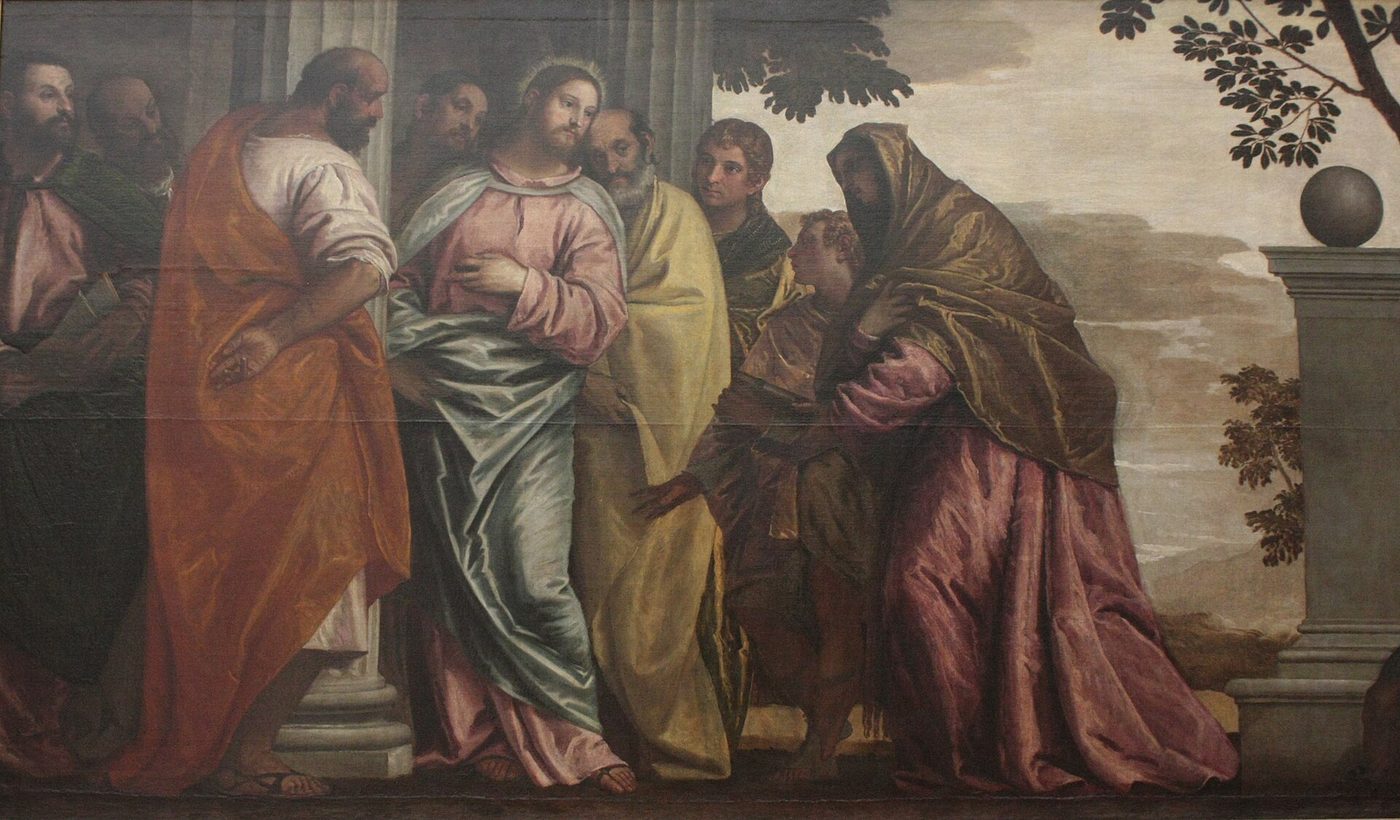
Isaiah’s Servant gives his life as an offering for sin and justifies many. James and John ask for the places of honor in Jesus’ glory. Jesus asks if they can drink His cup, and teaches that whoever wishes to be great must be servant, for He came to give His life as a ransom for many.
Mass Readings
- First Reading Isaiah 53:10-11
- Responsorial Psalm Psalm 33:4-5, 18-19, 20 and 22
- Second Reading Hebrews 4:14-16
- Gospel Mark 10:35-45
Open the Mass Readings on USCCB.org →
First Reading Isaiah 53:10-11
The Lord was pleased to crush His Servant in infirmity. If he gives his life as an offering for sin, he shall see his descendants. Through his suffering, my Servant shall justify many, and their guilt he shall bear.
Psalm Psalm 33
Lord, let your mercy be on us, as we place our trust in you.
Second Reading Hebrews 4:14-16
We have a great high priest who has passed through the heavens, Jesus, the Son of God. He is able to sympathize with our weaknesses, having been tested in every way, yet without sin. So let us confidently approach the throne of grace.
Gospel Mark 10:35-45
James and John ask to sit at Jesus’ right and left in His glory. He asks whether they can drink the cup He drinks. The other ten become indignant. Jesus says the rulers of the Gentiles lord it over others, but among you whoever wishes to be great must be your servant. The Son of Man came to serve and to give His life as a ransom for many.
Step Into the Story
Isaiah’s fourth Servant Song says the servant will give his life as an offering for sin and justify many. The emperor Tiberius was then ruling the world from a cliff-top villa on Capri, and Herod Agrippa I would have James beheaded around 44 A.D., the first of the Twelve to die for Christ. A ransom, lytron in Greek, was the price paid to free a slave or a prisoner of war.
- 14 A.D.Tiberius becomes emperor
- c. 18 A.D.Caiaphas becomes high priest
- 26 A.D.Pilate becomes prefect
- c. 27 A.D.Tiberius withdraws to Capri
- This week’s scene: c. 30 A.D.James and John ask for thrones
Walk the road up to Jerusalem; the year, as best we can tell, is 30 A.D. Jesus strides ahead of everyone. The disciples are amazed, and those following are afraid; He has just told them for the third time that He will be condemned and killed. Feel the climb in your legs. Hear the pilgrims singing psalms of ascent along the way.
Then two brothers edge forward, James and John, whom He has nicknamed the Sons of Thunder. They have a request, and they want a yes before they say what it is: the seats at His right and left in His glory. Behind you, the other ten have overheard, and you can feel their anger rise. Stand in the dust between them, and wait for His reply.
Encounter the Lord
Listen to James and John: “Teacher, we want you to do for us whatever we ask of you.” It sounds like a prayer, but it is really a demand for position. Jesus has just foretold His death for the third time.
Jesus does not crush their ambition; He redirects it. Do you want to be great? Serve. Do you want to be first? Be the slave of all. He Himself is the model: the Son of God who came to give His life as a ransom. Isaiah shows the Servant bearing our guilt. Hebrews shows Him as our High Priest who sympathizes with our weakness. That is why you can approach Him with confidence, even when you are ashamed of your own ambition.
This week, look for a chance to serve without being noticed or thanked. And approach the throne of grace in Confession with confidence.
Know Your Faith
- 98·whether God willed the death of His Son
- 101·why Jesus redeemed us on the Cross
- 259·the common and the ordained priesthood
Christ’s Redemptive Death
Jesus’ death is the unique and definitive sacrifice; it is first a gift from God the Father Himself, and also the offering of the Son (CCC 613-614). Jesus atoned for our faults and made satisfaction for our sins to the Father (CCC 615).
Christ Emptied Himself
The Son emptied Himself, taking the form of a slave, and became obedient unto death (CCC 461, 472). He came to serve and to give His life as a ransom for many (CCC 608, 622).
Christ the High Priest
Christ is the unique High Priest according to the order of Melchizedek (CCC 1544). The ministerial priesthood is at the service of the common priesthood; only Christ is the true priest (CCC 1545-1547).
Ransom for Many
The Son of Man came to give His life as a ransom for many; this “many” means all, for He died for every person without exception (CCC 605, 622).
Key Takeaways
- Scripture
- Doctrine
- Sacraments
- Christian Life


- Doctrine: Jesus came to serve and to give His life as a ransom for many.
- Christian Life: Greatness in God’s kingdom comes from serving others.
- Doctrine: Jesus is our High Priest who understands our weakness.
- Christian Life: We can approach God’s throne of grace with confidence.
Test Your Knowledge
True or false? Tap your answer.
James and John asked to sit at Jesus’ right and left in His glory.
True.
The other ten apostles were pleased with their request.
False: they were indignant.
Jesus said the Son of Man came to be served.
False: He came to serve and give His life as a ransom.
A ransom was the price paid to free a slave or prisoner.
True.
Hebrews says Jesus was tested in every way, yet without sin.
True.
Isaiah’s Servant justifies many through his suffering.
True.
James was the first of the Twelve to be martyred.
True.
The Catechism teaches that Christ died only for some people.
False: He died for every person without exception, CCC 605.
The “cup” was a biblical image of suffering and destiny.
True.
The Catechism teaches that only Christ is the true priest.
True.
Answers: 1 T · 2 F (they were indignant) · 3 F (He came to serve and give His life as a ransom) · 4 T · 5 T · 6 T · 7 T · 8 F (He died for every person without exception, CCC 605) · 9 T · 10 T
Journal Prompts
Where do I seek recognition or position?
How could I serve someone this week without being noticed?
Do I approach God with confidence, or with fear?
What cup of suffering am I being asked to share with Jesus?
Talk to God
Lord Jesus, You came not to be served but to serve and to give Your life for me. Free me from seeking honor. Make me a humble servant, and give me confidence to approach Your throne of grace. Amen.