Sunday, October 31, 2027 · Year B
Thirty-first Sunday in Ordinary Time
You shall love the Lord your God with all your heart
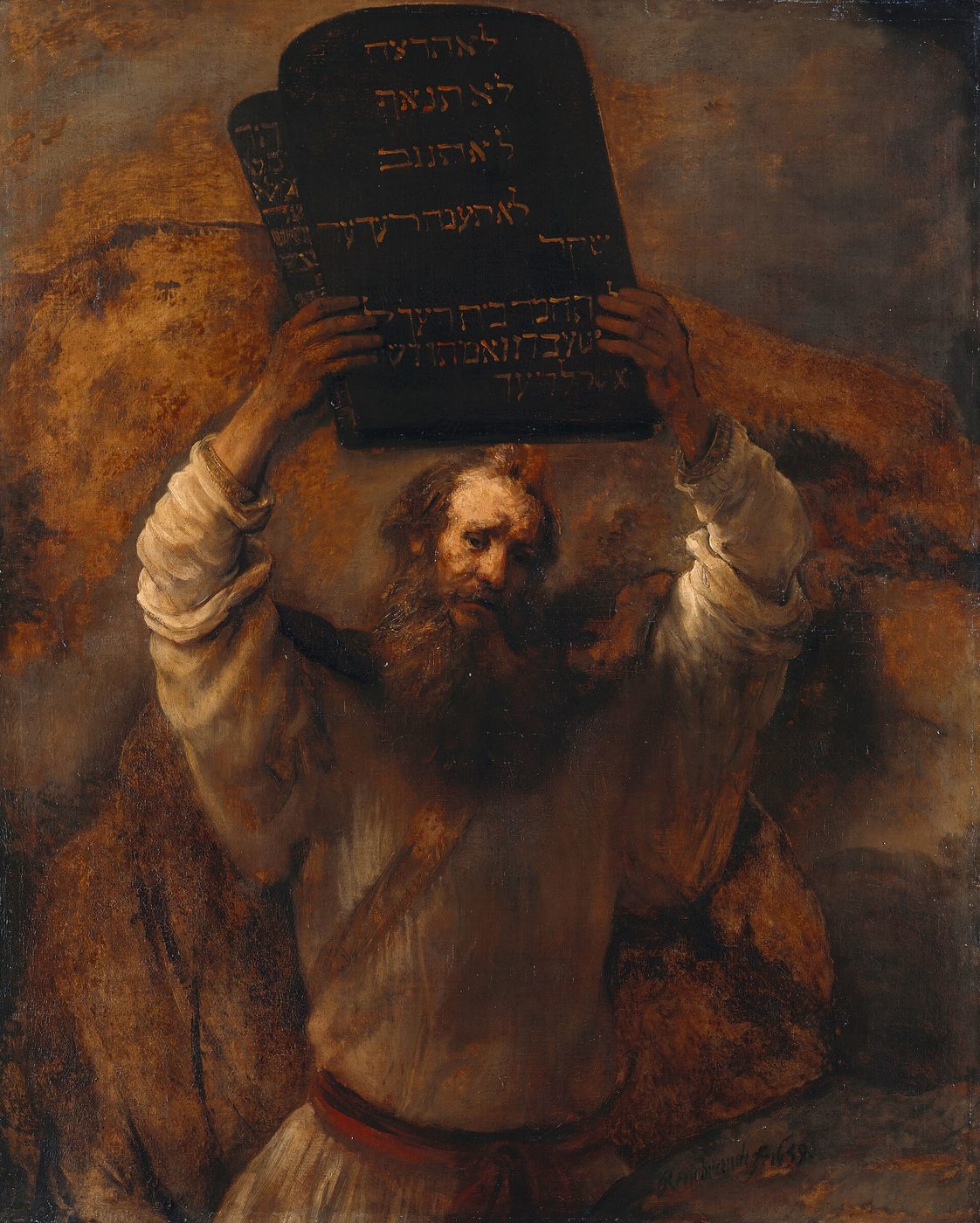
Moses teaches Israel the Shema: the Lord is our God, the Lord alone, and you shall love Him with all your heart, soul and strength. A scribe asks Jesus which commandment is first. Jesus answers with the Shema and adds love of neighbor. The scribe agrees, and Jesus tells him he is not far from the kingdom.
Mass Readings
- First Reading Deuteronomy 6:2-6
- Responsorial Psalm Psalm 18:2-3, 3-4, 47 and 51
- Second Reading Hebrews 7:23-28
- Gospel Mark 12:28b-34
Open the Mass Readings on USCCB.org →
First Reading Deuteronomy 6:2-6
Moses tells the people to fear the Lord and keep His commandments so they may have long life. “Hear, O Israel! The Lord is our God, the Lord alone! Therefore you shall love the Lord, your God, with all your heart, and with all your soul, and with all your strength.”
Psalm Psalm 18
I love you, Lord, my strength.
Second Reading Hebrews 7:23-28
The levitical priests were many because death prevented them from remaining in office, but Jesus, because He remains forever, has a priesthood that does not pass away. He is always able to save those who approach God through Him. He offered sacrifice once for all when He offered Himself.
Gospel Mark 12:28b-34
A scribe asks Jesus which is the first of all the commandments. Jesus answers: “Hear, O Israel! The Lord our God is Lord alone! You shall love the Lord your God with all your heart, soul, mind and strength.” The second is: “You shall love your neighbor as yourself.” The scribe agrees. Jesus tells him, “You are not far from the kingdom of God.”
Step Into the Story
“Hear, O Israel!” The Shema of Deuteronomy 6 was recited by devout Jews morning and evening. They took literally the command to bind the words on their arms and foreheads and write them on their doorposts; leather tefillin with tiny parchment scrolls inside, likely from around the time of Christ, have turned up in the caves at Qumran. Josephus counts twenty-eight high priests between Herod’s reign and the Temple’s fall, a turnover worthy of the Roman emperors.
- 13th c. B.C.The Law given at Sinai
- c. 20 B.C.Herod begins the Temple
- 14 A.D.Tiberius becomes emperor
- 26 A.D.Pilate becomes prefect
- This week’s scene: c. 30 A.D.The first commandment of all
Go up into the Temple courts in Jesus’ last week, a few days before Passover, which most scholars date to 30 A.D. Stand where you can see past the inner gates to the great altar of unhewn stone, its fire never allowed to go out. Watch the priests at work. Smell the smoke of the burnt offerings, the blood and the burning fat. Hear the bleating of the lambs and rams being led up.
All day the questions have come: the tax, the resurrection. Now a scribe who has listened and liked what he heard steps forward, alone, with an honest question: which commandment is first of all? Stand near him, the altar smoke drifting over the court, and listen. Before the end, he will say something remarkable about all these sacrifices.
Encounter the Lord
Listen to the scribe’s question. It is honest, and Jesus answers with the prayer every Jew knew by heart: “Hear, O Israel.” The first commandment begins not with doing but with listening.
God asks for all of you: heart, soul, mind, strength. Not a percentage, not leftovers. And love of God cannot be separated from love of neighbor. The scribe sees this and Jesus praises him: “You are not far from the kingdom.” Not far is good, but not yet there. The step that remains is to follow Jesus Himself, who loves God and neighbor perfectly and who, as our eternal High Priest, makes such love possible in us. Every commandment is a response to love that came first.
Pray the Shema slowly each morning this week. Then ask: what part of me am I holding back from God?
Know Your Faith
- 352·what the first commandment says
- 353·why we worship God
- 249·what happens in Holy Orders
The Commandments, a Response of Love
The commandments take on their full meaning within the covenant. Moral life is a response to the Lord’s loving initiative (CCC 2061-2062). Jesus summed up the commandments in the double commandment of love (CCC 2055).
The First Commandment
The first commandment summons us to believe in God, to hope in Him and to love Him above all else (CCC 2083-2086). Adoration is the first act of the virtue of religion (CCC 2096).
Holy Orders
Christ is the one priest; the ministerial priesthood makes present His unique priesthood without diminishing it (CCC 1544-1545). Through ordained ministers, the presence of Christ as Head of the Church is made visible (CCC 1549).
Love of Neighbor
Love of neighbor is inseparable from love of God (CCC 1822-1823, 2196). Charity is the soul of the holiness to which all are called (CCC 826).
Key Takeaways
- Scripture
- Doctrine
- Sacraments
- Christian Life


- Christian Life: The first commandment is to love God with all our heart, soul, mind and strength.
- Christian Life: Love of God and love of neighbor cannot be separated.
- Christian Life: The commandments are a response to God’s love that comes first.
- Doctrine: Jesus is our eternal High Priest who offered Himself once for all.
Test Your Knowledge
True or false? Tap your answer.
The Shema begins, “Hear, O Israel.”
True.
Jesus refused to answer which commandment is first.
False: He answered with the Shema and love of neighbor.
Jesus joined Deuteronomy 6 with Leviticus 19.
True.
The scribe disagreed with Jesus’ answer.
False: he agreed warmly.
Jesus told the scribe, “You are not far from the kingdom of God.”
True.
Hebrews says Jesus offered sacrifice once for all.
True.
The rabbis counted 613 commandments in the Torah.
True.
The Catechism teaches that adoration is the first act of the virtue of religion.
True.
Devout Jews recited the Shema only once a year.
False: they recited it morning and evening.
The Catechism teaches that the commandments take on their full meaning within the covenant.
True.
Answers: 1 T · 2 F (He answered with the Shema and love of neighbor) · 3 T · 4 F (he agreed warmly) · 5 T · 6 T · 7 T · 8 T · 9 F (they recited it morning and evening) · 10 T
Journal Prompts
What part of my heart, soul, mind or strength am I holding back from God?
How does my love of neighbor show my love of God?
Do I see the commandments as rules or as a response to love?
What step do I still need to take to be not just near, but in, the kingdom?
Talk to God
Lord God, You alone are God. Teach me to love You with all my heart, soul, mind and strength, and to love my neighbor as myself. Through Jesus, bring me from near the kingdom into it. Amen.