Sunday, November 7, 2027 · Year B
Thirty-second Sunday in Ordinary Time
She, from her poverty, has contributed all she had
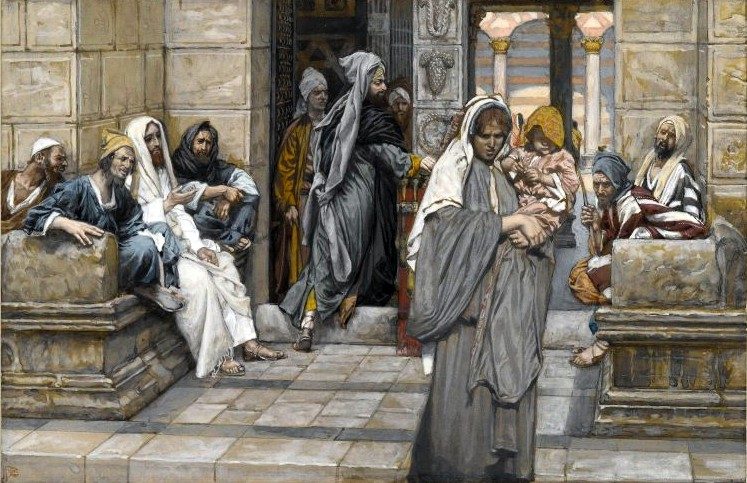
A poor widow of Zarephath uses her last flour and oil to feed Elijah, and the jar and jug do not run dry. Jesus warns against scribes who seek honor while devouring widows’ houses, then praises a poor widow who puts two small coins into the Temple treasury: she gave all she had.
Mass Readings
- First Reading 1 Kings 17:10-16
- Responsorial Psalm Psalm 146:7, 8-9, 9-10
- Second Reading Hebrews 9:24-28
- Gospel Mark 12:38-44
Open the Mass Readings on USCCB.org →
First Reading 1 Kings 17:10-16
During a drought, Elijah asks a widow of Zarephath for water and bread. She has only a handful of flour and a little oil, enough for a last meal for herself and her son. Elijah tells her not to be afraid: make me a cake first, and the jar of flour shall not go empty nor the jug of oil run dry. She does, and they eat for a year.
Psalm Psalm 146
Praise the Lord, my soul!
Second Reading Hebrews 9:24-28
Christ did not enter a sanctuary made by hands but heaven itself. He appeared once for all at the end of the ages to take away sin by His sacrifice. As it is appointed that men die once, and after this the judgment, so Christ was offered once and will appear a second time to bring salvation.
Gospel Mark 12:38-44
Jesus warns against the scribes who like long robes, greetings and places of honor, who devour the houses of widows and recite lengthy prayers for show. Sitting opposite the treasury, He watches many rich people put in large sums. A poor widow puts in two small coins. Jesus says she has put in more than all the others, for she gave from her poverty, all she had.
Step Into the Story
Elijah, wanted by Queen Jezebel, hides in Zarephath, a Phoenician town between Tyre and Sidon, in the heart of her own homeland. The drought has reached there too; Josephus quotes a Phoenician historian, Menander, who recorded a year-long drought under Jezebel’s father. A widow gathering sticks has one handful of flour and a little oil left. She feeds the prophet first, and the jar does not run dry.
- c. 20 B.C.Herod begins the Temple
- 14 A.D.Tiberius becomes emperor
- c. 18 A.D.Caiaphas becomes high priest
- 26 A.D.Pilate becomes prefect
- This week’s scene: c. 30 A.D.The widow’s two coins
Sit with Jesus in the Temple during His last week, probably in 30 A.D., opposite the treasury in the Court of the Women. Along the walls stand thirteen trumpet-shaped collection chests, the Mishnah says, each marked for its purpose. Hear the coins rattle down their narrow throats. Watch the scribes in their long robes stroll past, greeted with bows. Watch the rich, too, dropping in large sums with a satisfying clatter.
Then a poor widow comes up, alone. In her hand are two lepta, the smallest coins in circulation, together a quadrans, one sixty-fourth of a day’s wage. Listen for the tiny sound they make. Jesus has seen it. He calls the disciples over. Lean in with them, and hear what He says.
Encounter the Lord
Sit with Jesus opposite the treasury and watch the people pass. The rich drop in their heavy coins with a clatter. Then a widow slips in two tiny coins. No one notices, except Jesus.
God does not measure gifts the way we do. He looks at what it costs and at the heart behind it. The widow of Zarephath and the widow in the Temple both gave from their need, trusting God to provide. Both are pictures of Jesus, who gave all He had on the Cross, once for all. Jesus also warns against religion used for show. St. John of the Cross reminds you how you will be judged: on your love. Not on how much you appeared to give, but on how much you held back.
Give something this week that truly costs you: time, money or attention. Do it quietly, trusting that God sees and will provide.
Know Your Faith
- 157·what happens to us at death
- 449·how we should treat the poor
- 467·why Jesus asks for poverty in spirit
Christ Gave His Life
Christ’s sacrifice is unique; it completes and surpasses all other sacrifices. He gave His whole life as an offering (CCC 613-614, 616).
Poverty of Heart
Jesus praised the poor widow who gave out of her poverty all she had to live on (CCC 2544). The precept of detachment from riches is obligatory for entrance into the kingdom (CCC 2556).
Almsgiving
Giving alms to the poor is a witness to fraternal charity and a work of justice pleasing to God (CCC 2447, 1969). Elijah’s encounter with the widow shows the faith that God rewards (CCC 2583).
The Particular Judgment
Each person receives his eternal retribution in his immortal soul at the very moment of his death, in a particular judgment that refers his life to Christ (CCC 1021-1022). It is appointed for men to die once, and after that comes judgment (CCC 1013).
Key Takeaways
- Scripture
- Doctrine
- Sacraments
- Christian Life


- Christian Life: God values gifts by the love and sacrifice behind them, not their size.
- Christian Life: God provides for those who trust Him and give generously.
- Christian Life: Jesus warns against practicing religion for show.
- Doctrine: After death each person faces judgment, and we will be judged on our love.
Test Your Knowledge
True or false? Tap your answer.
The widow of Zarephath had plenty of flour and oil.
False: she had only a handful of flour and a little oil.
The widow’s jar of flour did not go empty.
True.
Zarephath was a Phoenician town outside Israel.
True.
Jesus praised the scribes for their long prayers.
False: He warned against those who pray for show and devour widows’ houses.
The widow in the Temple put in two small coins.
True.
Jesus said the widow gave more than all the others.
True.
Hebrews says Christ was offered once and will appear a second time.
True.
The Catechism teaches that the particular judgment takes place at death.
True.
Widows in the ancient world had strong inheritance rights.
False: they had none and depended on others.
Almsgiving is a work of justice pleasing to God.
True.
Answers: 1 F (she had only a handful of flour and a little oil) · 2 T · 3 T · 4 F (He warned against those who pray for show and devour widows’ houses) · 5 T · 6 T · 7 T · 8 T · 9 F (they had none and depended on others) · 10 T
Journal Prompts
Do I give God my leftovers or my best?
What gift would truly cost me something this week?
Where do I practice my faith for others to see?
If I were judged on my love today, what would I find?
Talk to God
Lord Jesus, You saw the widow’s small gift and praised her love. Free me from giving only what I will not miss. Teach me to trust You and to give from my heart, for You gave everything for me. Amen.